
Overview
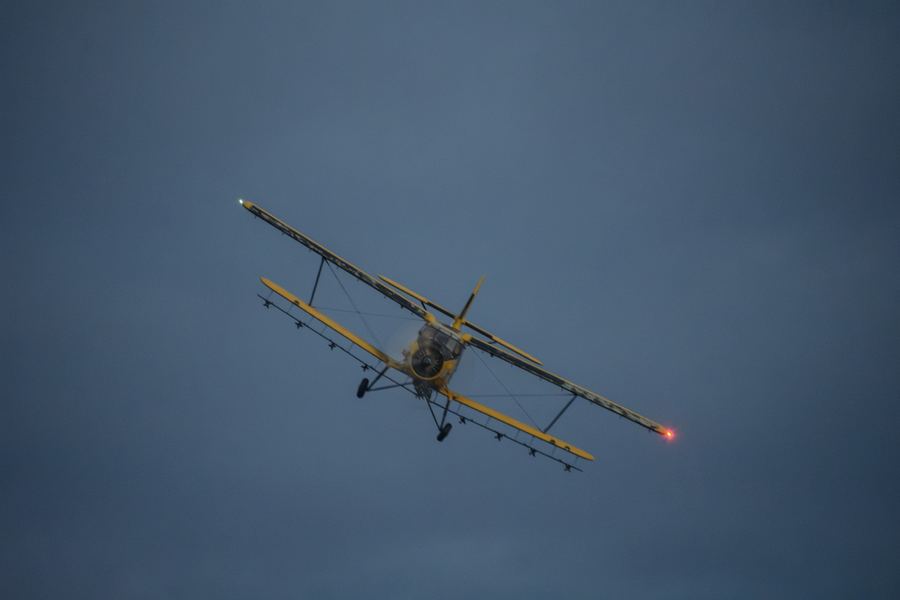
Agricultural aviation, commonly known as crop dusting, uses specially built aircraft to spray pesticides, herbicides, fertilizer, or seed over farmland, and is also used for tasks like frost prevention and mosquito control. Purpose-built agricultural aircraft are typically small, rugged, low-wing monoplanes designed to fly very low and slow while carrying a hopper of chemical or seed beneath the fuselage. The practice began in the early 1920s in the United States using surplus military biplanes to combat crop-destroying insects, and it grew into a dedicated aircraft manufacturing niche by the mid-20th century. Because operations are flown at extremely low altitude over uneven terrain, agricultural aviation carries a higher accident rate than most other aviation sectors, and pilots require specialized low-level flying training.
History
Agricultural aviation began in the early 1920s in the United States, using surplus World War I biplanes to spray pesticides over crops threatened by insect infestations. The practice grew into a dedicated aircraft manufacturing niche by the mid-20th century, as companies began designing purpose-built crop-dusting aircraft rather than adapting general-purpose planes. Post-war agricultural expansion and the development of chemical pesticides and fertilizers through the 1950s and 1960s drove significant growth in the industry, and modern agricultural aircraft now incorporate GPS-guided spray systems for far more precise chemical application than early operators had available.
Design & Specifications
Agricultural aircraft are built low to the ground with a rugged, simple airframe designed to withstand repeated low-altitude turns and rough-field landings near the fields being treated. A hopper mounted in or above the fuselage holds the chemical, fertilizer, or seed payload, feeding it through a spray boom or spreader mechanism. Modern agricultural aircraft increasingly incorporate GPS-guided application systems that track position and automatically adjust flow rate for precise coverage. Because these aircraft operate so close to the ground, they're typically fitted with reinforced landing gear and cockpit protection to improve pilot survivability in an accident.
Operations
A typical agricultural flight involves the pilot flying tight, parallel passes across a field at very low altitude, releasing chemical along a precisely calculated swath on each pass. Pilots time applications around weather, since wind can cause drift onto neighboring properties, and most jurisdictions require buffer zones near waterways or residences. Many flights are scheduled for early morning or evening when winds are calmest, minimizing drift and turbulence. Between fields, aircraft return to a nearby staging area to reload the hopper, a process ground crews aim to complete quickly to keep the aircraft flying.
See also
References
| Category | Special Operations & General Aviation |
| Type | Crop spraying / dusting |
| Aircraft Used | Air Tractor, Piper Pawnee |
| Origin | US, early 1920s |
| Risk Level | Higher than average aviation |