
Overview
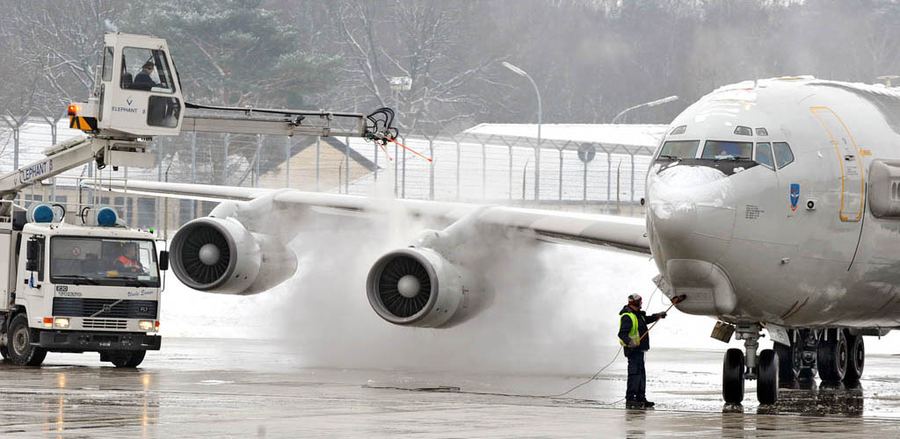
De-icing is the process of removing snow, ice, or frost from a surface, while the related practice of anti-icing applies chemicals that continue delaying ice formation for a period after application, making later mechanical removal easier if needed. In aviation, de-icing is typically carried out using specialized trucks that spray a heated fluid — usually a glycol-based mixture — over the aircraft's wings, fuselage, and control surfaces before departure in cold-weather conditions. This process is critical for flight safety, since even a thin layer of ice or frost on a wing can disrupt airflow and reduce lift enough to affect a safe takeoff. Airports in cold climates maintain dedicated de-icing pads and fleets of purpose-built trucks to keep this process moving quickly during winter operations, since delays can quickly cascade across an entire day's flight schedule.
History
Aircraft de-icing became a formalized safety procedure following several accidents in the mid-20th century linked to ice contamination on wings during takeoff, prompting aviation authorities to mandate pre-flight de-icing in cold conditions. Glycol-based de-icing fluids were developed and standardized through the 1960s and 1970s as more effective and consistent alternatives to earlier mechanical scraping methods. Dedicated de-icing trucks and, at major airports, centralized de-icing pads became standard cold-weather infrastructure by the late 20th century, reflecting how central rapid, reliable de-icing has become to winter airport operations.
Design & Specifications
De-icing trucks carry large tanks of heated glycol-based fluid, delivered through a boom-mounted spray nozzle that an operator controls from an elevated cab or remote panel to reach all critical aircraft surfaces. Type I fluid, typically diluted and heated, is used to remove existing ice and snow, while thicker, less diluted Type IV fluid is applied afterward to provide ongoing anti-icing protection during the period before takeoff. The truck's spray boom can extend and rotate to reach the top of the fuselage and upper wing surfaces on larger aircraft, while ground-level nozzles handle lower surfaces and landing gear areas. Fluid runoff at de-icing pads is typically collected and treated separately from normal airport drainage, since glycol-based fluid requires specific environmental handling.
Operations
De-icing operations are typically performed either at the gate immediately before pushback or at a dedicated de-icing pad the aircraft taxis to just before takeoff, depending on the airport's layout and traffic volume. Ground crews apply fluid systematically across the aircraft in a specific sequence, ensuring complete coverage of wings, tail surfaces, and other critical areas before signaling the flight crew that de-icing is complete. Pilots and de-icing crews track a fluid's expected holdover time, the period during which the anti-icing protection remains effective, and must complete takeoff before that window expires or repeat the treatment. During heavy winter weather, de-icing pad capacity can become a significant bottleneck, sometimes causing queuing delays as multiple aircraft wait their turn for treatment before departure.
References
| Category | Airport & Ground Infrastructure |
| Type | Ground support vehicle |
| Method | Heated glycol-based fluid spray |
| Purpose | Remove ice/frost pre-departure |
| Status | Standard in cold-weather ops |