
Overview
An air traffic controller (ATC) coordinates air traffic within controlled airspace, typically working from area control centers or control towers while monitoring aircraft movements and communicating directly with pilots. The profession dates to the early 1920s in the United Kingdom, where the first control tower was established at Croydon Airport in February 1920; in the United States, Archie League is regarded as the first air traffic controller, hired by the city of St. Louis in 1929 to help prevent collisions. Early controllers relied on simple visual signaling before radar and radio communication transformed the role over subsequent decades. The job is widely considered highly demanding and stressful, requiring continuous decision-making, strong situational awareness, and the ability to perform reliably under time pressure, though it also offers competitive salaries and strong job security.
History
Air traffic control began in the United Kingdom in 1920, when the first control tower opened at Croydon Airport, followed shortly by Jimmy Jeffs receiving the first air traffic control license in 1922. In the United States, Archie League is regarded as the first air traffic controller, hired by the city of St. Louis in 1929 to help prevent airfield collisions using simple visual signaling equipment. Radar technology, developed during World War II, transformed the profession from the 1940s onward by letting controllers track aircraft positions directly rather than relying solely on pilot radio reports, and subsequent decades of computerization further modernized how controllers manage increasingly crowded airspace.
Design & Specifications
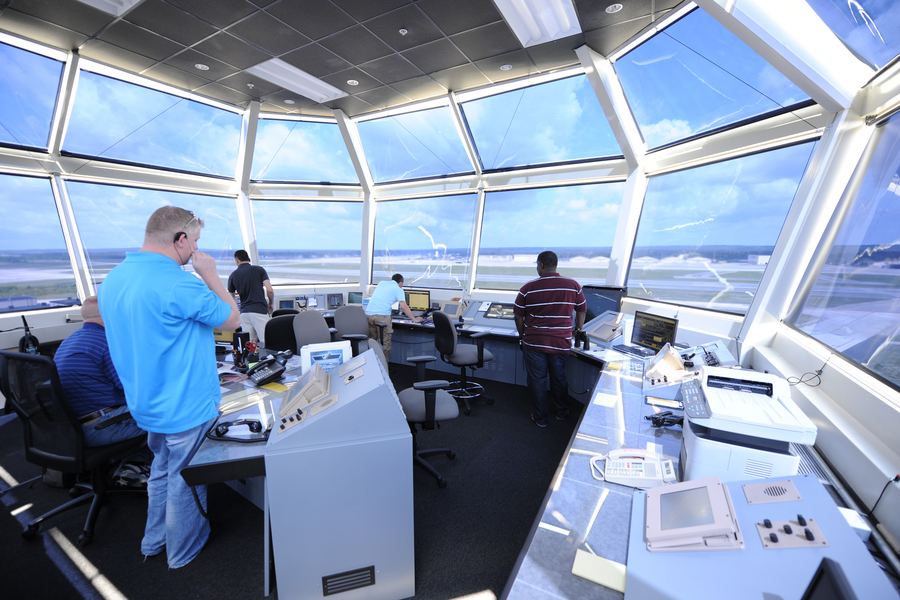
Controllers work from stations equipped with radar displays, radio panels, and flight data systems, monitoring aircraft continuously across their assigned sector of airspace or airport.
Operations
Controllers issue instructions to pilots covering routing, altitude, and sequencing, working in coordinated shifts to maintain continuous coverage and handing off aircraft between sectors as they transit different areas.
See also
References
| Category | Aviation Personnel |
| Type | Aviation safety profession |
| First Tower | Croydon Airport, UK, 1920 |
| First US Controller | Archie League, 1929 |
| Key Tool | Radar (since WWII) |