
Overview
Meteorology is the scientific study of Earth's atmosphere and short-term atmospheric phenomena, commonly known as weather, with a strong focus on forecasting; aviation meteorology applies this science specifically to the needs of pilots, dispatchers, and air traffic controllers. Meteorology forms part of the broader atmospheric sciences alongside climatology, atmospheric physics, and atmospheric chemistry, and aviation-specific applications draw heavily on all of these related disciplines. Weather has an outsized impact on aviation safety and efficiency, affecting everything from takeoff and landing conditions to en-route turbulence, icing risk, and fuel planning for potential diversions. Aviation meteorologists and forecasting services provide pilots and airlines with specialized products, including terminal forecasts, significant weather charts, and real-time hazard alerts, tailored specifically to the operational needs of flight planning and execution.
History
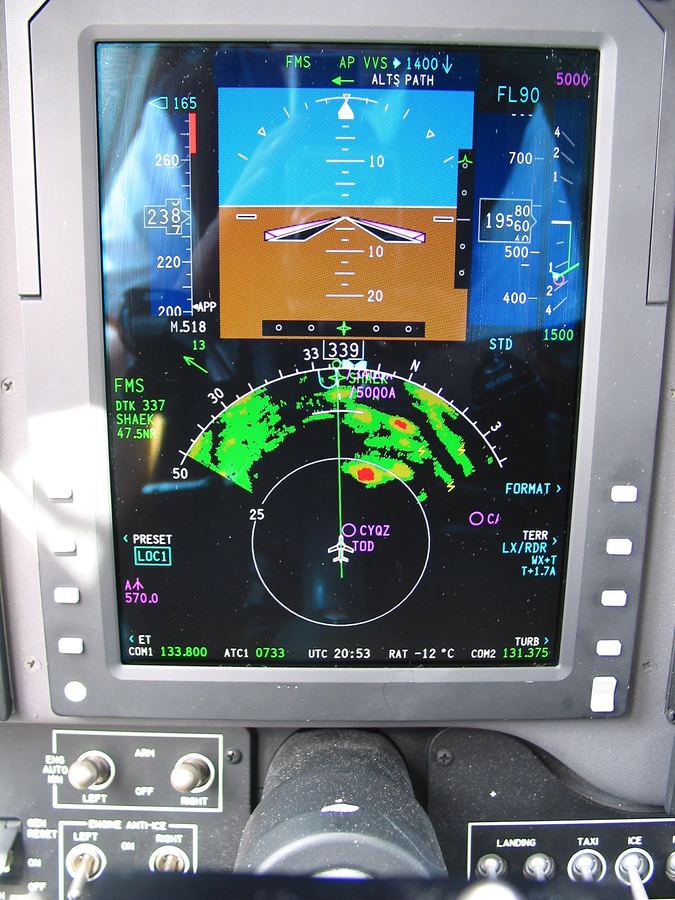
Aviation-specific weather forecasting developed as a distinct discipline in the early 20th century, as the growing airline industry needed far more precise and timely weather information than general public forecasting could provide. World War II drove significant advances in meteorological science and forecasting technology, as military aviation planning depended heavily on accurate weather prediction for mission success. Radar-based weather detection, developed from the 1950s onward, transformed aviation meteorology by letting forecasters and pilots identify hazardous storm cells with far greater precision than visual observation alone allowed. Satellite weather monitoring, which became widely available from the 1960s and 1970s onward, further revolutionized aviation forecasting by providing continuous, large-scale weather pattern data that dramatically improved both short-term and longer-range aviation weather forecasts.
Design & Specifications
Aviation meteorologists use radar, satellite imagery, and ground observation networks to generate forecasts specifically formatted for pilot and dispatcher flight planning use.
Operations
Pilots and dispatchers review aviation weather products including terminal forecasts and significant weather charts before every flight, adjusting routing or timing to avoid hazardous conditions.
See also
References
| Category | Navigation, Meteorology & Rules |
| Type | Applied atmospheric science |
| Focus | Pilot / dispatcher / ATC forecasting |
| Key Tools | Radar, satellite monitoring |
| Status | Core flight-planning input |