
Overview
Jet fuel is a kerosene-based fuel used by gas turbine engines in most commercial and military aircraft, with Jet A and Jet A-1 the dominant grades used in civil aviation in the United States and internationally, respectively. Compared to gasoline, jet fuel has a higher flash point, making it safer to handle and store in large quantities, and its energy density and cold-weather performance are carefully controlled to meet strict international specifications. Jet fuel is refined from crude oil through a fractional distillation and treatment process similar to diesel and kerosene production, with additives blended in to control icing, static buildup, and microbial growth in fuel tanks. Rising interest in decarbonizing aviation has driven growing production of sustainable aviation fuel, a drop-in replacement designed to work in existing turbine engines without modification while cutting lifecycle carbon emissions.
History
Kerosene-based jet fuel was developed alongside early jet engine technology in the 1940s, as engineers needed a fuel with different combustion properties than the gasoline used in piston engines. Jet A and Jet A-1 specifications were standardized over subsequent decades to ensure consistent performance and safety across different manufacturers and climates, with Jet A-1's lower freezing point making it the preferred standard for international and high-altitude operations. Rising interest in decarbonizing aviation since the 2010s has driven substantial investment in sustainable aviation fuel, a chemically similar drop-in replacement designed to reduce lifecycle emissions without requiring engine modifications.
Design & Specifications
Jet A and Jet A-1 are refined through fractional distillation of crude oil, producing a kerosene-based fuel with carefully controlled freezing point, flash point, and energy density to meet international aviation specifications. Additives are blended into jet fuel to control icing in fuel lines, prevent microbial growth in storage tanks, and dissipate static electricity buildup during high-speed fuel transfer. Jet A-1 has a lower freezing point than Jet A, making it the preferred standard for international flights and high-altitude operations where fuel temperatures can drop significantly. Fuel storage at airports involves large tank farms connected to underground hydrant systems or fuel trucks, with rigorous quality control testing at multiple points before fuel ever reaches an aircraft.
Operations
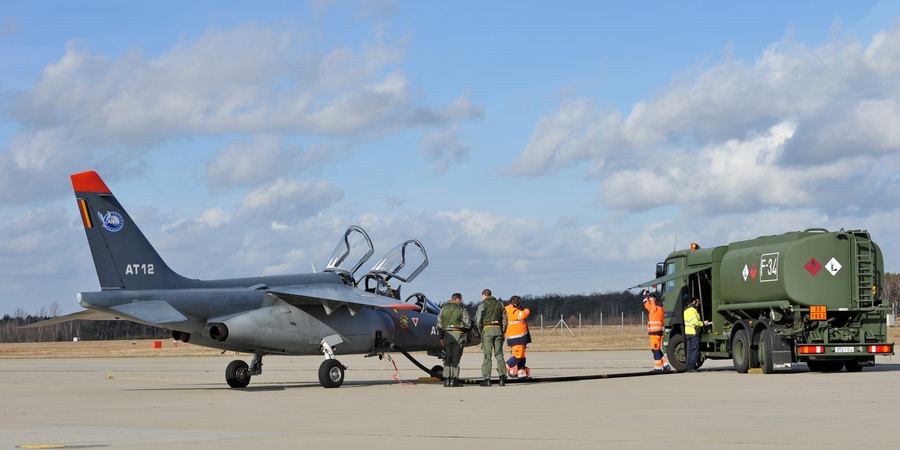
Aircraft are fueled either through underground hydrant systems connected directly to gate positions, or via mobile fuel trucks that drive out to the aircraft during its turnaround. Fueling crews calculate the precise fuel load needed for each flight based on the flight plan, alternate airport requirements, and reserve fuel regulations, coordinating closely with the flight crew and dispatch. Fuel quality is tested regularly throughout the supply chain, from refinery to storage tank to final aircraft delivery, checking for contamination, water content, and proper additive levels. Fuel pricing and hedging represent a major ongoing operational and financial concern for airlines, given how directly jet fuel costs affect overall airline profitability.
References
| Category | Fuel & Powerplants |
| Type | Kerosene-based turbine fuel |
| Standard Grades | Jet A (US), Jet A-1 (int'l) |
| Introduced | 1940s, with jet engines |
| Status | Standard worldwide |