
Overview
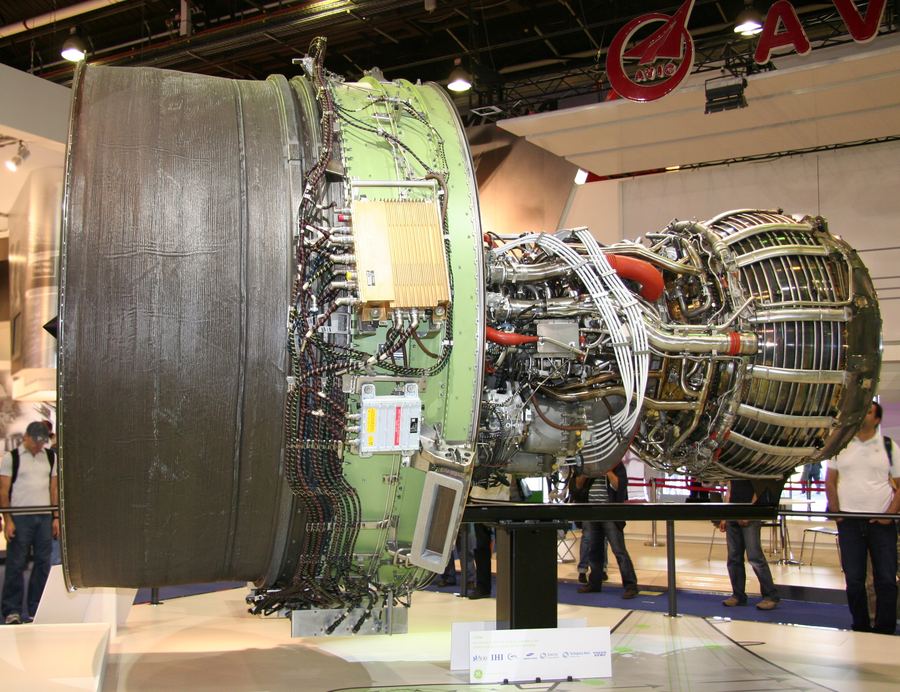
A turbofan is the dominant jet engine type used on modern commercial airliners, combining a traditional gas turbine core with a large front-mounted fan that pushes a significant portion of intake air around the engine core rather than through it, improving fuel efficiency and reducing noise compared to earlier turbojet designs. The ratio of air bypassing the core to air passing through it — the bypass ratio — has steadily increased over decades of engine development, with modern high-bypass turbofans delivering substantially better fuel economy than the low-bypass turbofans common in the 1960s and 70s. High-bypass turbofans power virtually all modern wide-body and narrow-body airliners, while low-bypass turbofans, which prioritize speed and thrust over efficiency, remain common on military fighter aircraft. Continued improvements in turbofan design, including geared fan architectures that let the fan and core turbine spin at different optimal speeds, have been central to recent generations of more fuel-efficient airliners.
History
Early turbofan engines emerged in the 1960s as manufacturers sought better fuel efficiency and lower noise than the turbojet engines used on first-generation jetliners. Bypass ratios increased steadily over subsequent decades, with high-bypass turbofans becoming standard on wide-body airliners starting in the 1970s, led by engines developed for aircraft like the Boeing 747. Geared turbofan technology, which lets the fan and core turbine spin at different optimal speeds, was developed and certified in the 2010s, enabling a new generation of significantly more fuel-efficient engines used on aircraft such as the Airbus A320neo family.
Design & Specifications
A turbofan combines a large front-mounted fan with a smaller gas turbine core, with the bypass ratio, the proportion of air flowing around versus through the core, determining how the engine balances thrust, fuel efficiency, and noise. High-bypass turbofans used on modern airliners feature bypass ratios often exceeding 10:1, meaning most of the air moved by the engine bypasses the combustion core entirely, delivering thrust more efficiently at typical airliner cruise speeds. Modern geared turbofan designs insert a gearbox between the fan and the low-pressure turbine, letting each spin at its own more efficient rotational speed rather than being mechanically locked together. Engine nacelles and internal components are built from advanced materials including titanium and composite materials, balancing strength against the aircraft's overall weight budget.
Operations
Turbofan engines are managed by a full-authority digital engine control (FADEC) computer system, which automatically adjusts fuel flow and other parameters to optimize performance and protect the engine across all phases of flight. Pilots control engine thrust through throttle levers in the cockpit, with the FADEC system translating that input into the precise fuel and airflow adjustments needed to deliver the requested thrust safely. Scheduled maintenance for turbofan engines follows a strict interval-based program, including borescope inspections of internal components and periodic complete overhauls after a set number of flight cycles or hours. Engine health monitoring systems continuously track dozens of parameters during flight, transmitting data that lets airlines and manufacturers detect developing issues before they result in an in-flight problem.
See also
References
| Category | Fuel & Powerplants |
| Type | High-bypass jet engine |
| Introduced | 1960s |
| Used On | Most modern airliners |
| Recent Advance | Geared turbofan (2010s) |