
Overview
Hang gliding is an air sport in which a pilot flies a light, non-motorized, fixed-wing heavier-than-air aircraft called a hang glider, most commonly built from an aluminum alloy or composite frame covered with synthetic sailcloth to form the wing. The pilot is typically suspended in a harness below the airframe and controls the aircraft by shifting their body weight against a control frame, rather than using conventional control surfaces. Early hang gliders had a low lift-to-drag ratio that limited pilots to gliding down small hills, but by the 1980s design improvements had raised that ratio significantly, allowing pilots to soar for hours and gain thousands of meters of altitude using rising thermal air currents. Modern hang gliding remains both a recreational activity and a competitive sport, with pilots capable of covering substantial cross-country distances under the right atmospheric conditions.
History
Otto Lilienthal's systematic hang glider experiments in the 1890s in Germany are widely regarded as the foundation of modern hang gliding, predating powered flight and directly influencing early aircraft pioneers including the Wright brothers. Modern hang gliding as a recreational sport emerged in the 1970s, driven by advances in lightweight aluminum and synthetic sailcloth construction that made flexible-wing hang gliders far more practical and accessible than earlier rigid designs. Performance improved dramatically through the 1980s as wing design matured, allowing pilots to soar for hours and cover significant cross-country distances rather than simply gliding down a hillside. Hang gliding remains an active competitive and recreational sport today, closely related to paragliding but distinguished by its rigid-framed wing structure.
Design & Specifications
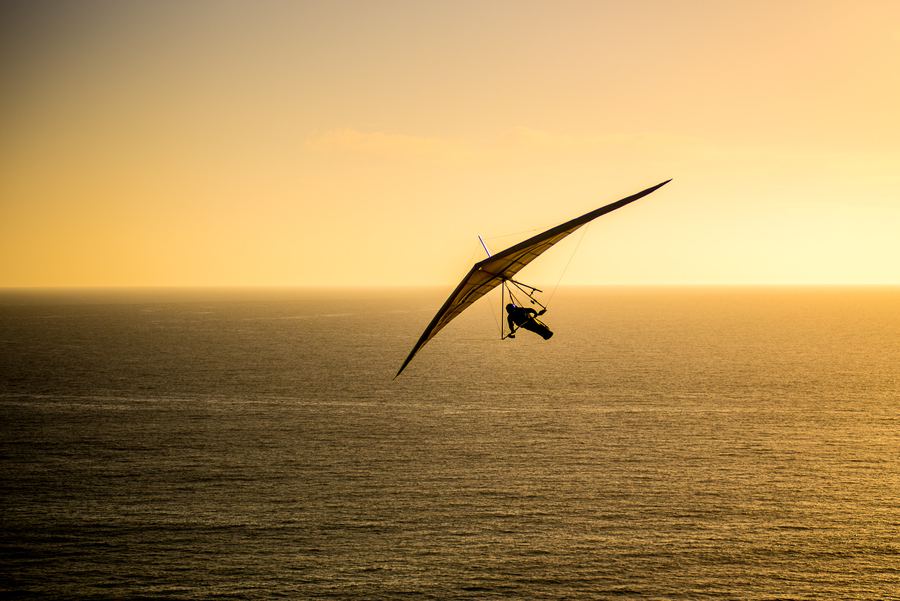
A hang glider's flexible fabric wing is supported by an aluminum or composite frame, with the pilot suspended in a harness below and controlling flight by shifting body weight against the frame.
Operations
Pilots launch by foot from a hill or via tow, then fly by shifting weight to control pitch and roll, seeking thermal or ridge lift to extend flight time and distance.
See also
References
| Category | Aircraft Types & Categories |
| Type | Foot-launched flexible-wing glider |
| Pioneer | Otto Lilienthal, 1890s |
| Modern Sport Era | 1970s onward |
| Status | Active recreational sport |