
Overview
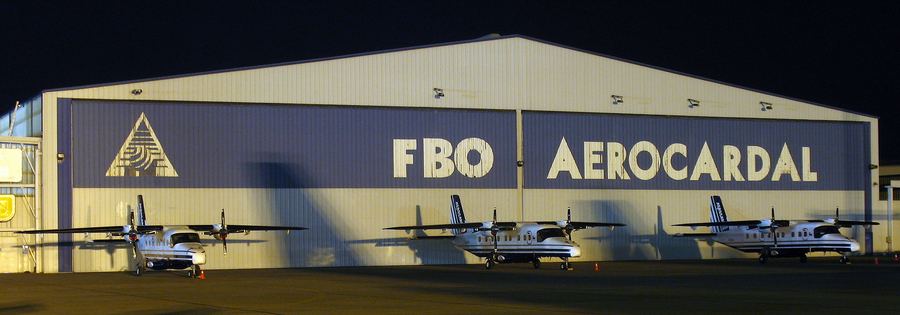
A fixed-base operator (FBO) is an organization granted the right by an airport to provide aeronautical services such as fueling, hangaring, aircraft parking, maintenance, and flight instruction, typically operating from land leased directly from the airport. In common practice, an FBO serves as the primary support-services provider for general aviation operators at a public-use airport, and in smaller or more remote communities the local town itself sometimes runs a basic FBO facility to provide fuel service. Most FBOs at higher-traffic airports are non-governmental organizations, operating either as privately held or publicly traded companies rather than government agencies. Although the term originated in the United States, it has become increasingly common in international aviation as business and corporate aviation has expanded globally.
History
The fixed-base operator model developed in the United States in the early-to-mid 20th century, as general aviation airports needed a way to provide fueling, hangaring, and maintenance services without the airport itself directly operating these businesses. Leasing airport land to private FBO operators became the standard arrangement by the mid-20th century, letting airports focus on infrastructure while specialized companies handled service delivery to pilots and aircraft owners. The term and model later spread internationally as business and corporate aviation expanded globally from the late 20th century onward, though it remains most strongly associated with US general aviation practice.
Design & Specifications
A typical FBO facility includes a passenger terminal or lobby for general aviation travelers, aircraft parking ramp space, fuel storage and delivery infrastructure, and often hangar space for based or transient aircraft. Larger FBOs may also offer maintenance services, flight training, and aircraft rental alongside their core fueling and ground handling functions. FBO facilities are typically designed with a more streamlined, private-aviation-focused layout than a commercial passenger terminal, since general aviation travelers generally don't go through the same security screening process. Fuel storage tanks and delivery trucks at an FBO must stock both jet fuel and avgas separately, serving the full range of turbine and piston aircraft that use general aviation airports.
Operations
FBO staff coordinate directly with arriving and departing aircraft, arranging fuel delivery, parking assignment, and any requested ground services like lavatory service or aircraft cleaning. Pilots typically contact the FBO in advance to arrange services and confirm availability, particularly at busier airports or during high-demand periods like major sporting events. FBOs operating at airports without a control tower or with limited hours often provide informal traffic advisories to pilots over local radio frequencies as an additional service. Competition between multiple FBOs at the same airport is common at busier general aviation fields, with each competing on service quality, fuel pricing, and available amenities to attract based and transient aircraft.
References
| Category | Airport & Ground Infrastructure |
| Type | General aviation service provider |
| Services | Fueling, hangaring, maintenance |
| Origin | United States, early-mid 20th c. |
| Status | Standard at GA airports |