
Overview
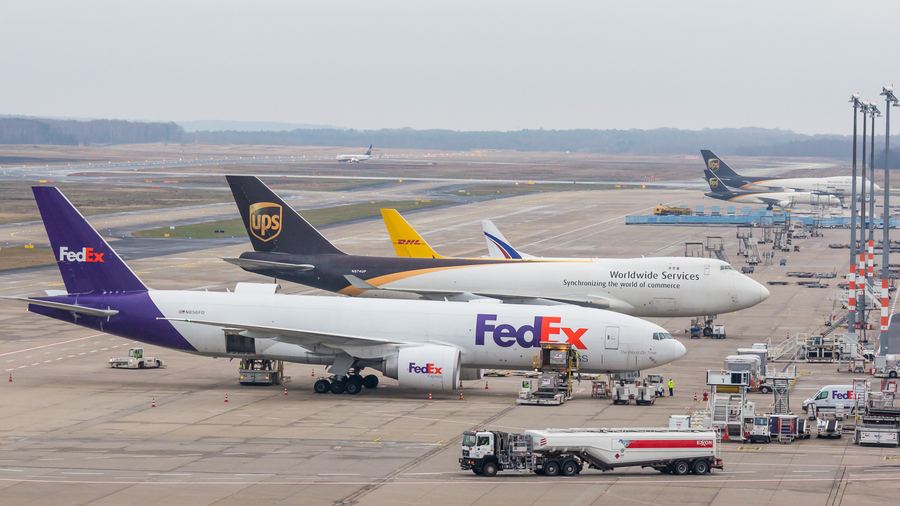
Integrated carriers are cargo airlines that control every stage of a shipment's journey — pickup, sorting, linehaul transport, and final delivery — under a single company, rather than handing packages off between separate freight forwarders and airlines. FedEx, UPS, and DHL are the classic examples of this model, each running dedicated aircraft fleets alongside extensive ground networks so a package can move door-to-door without changing carriers. This integrated approach set these companies apart from traditional cargo airlines that primarily transport freight between airports on behalf of third-party logistics firms, and it became the dominant model for express, time-guaranteed package delivery worldwide.
History
FedEx's 1971 founding and its buildout of a centralized Memphis sorting hub through the 1970s established the core operating model that integrated carriers still use today: controlling pickup, sorting, linehaul, and delivery entirely within one company. UPS, originally a ground-based delivery company, expanded into air freight in 1953 and significantly scaled up its own air operations through the 1980s to compete directly with FedEx's express model. DHL pioneered international express document delivery starting in 1969, later expanding into full integrated air freight service worldwide. The rapid growth of e-commerce since the 2000s has driven continued expansion of integrated carrier networks, fleets, and sorting infrastructure globally.
Design & Specifications
Integrated carriers build their operations around a centralized sorting hub, where aircraft arriving from many originating cities converge during a set overnight window, exchange packages by destination, and depart again before morning delivery deadlines. This hub-and-spoke sorting model, pioneered by FedEx at its Memphis hub, requires enormous ground sorting infrastructure alongside the aircraft fleet itself, including high-speed conveyor systems and barcode scanning to route each package correctly within a tight overnight window. Ground vehicle fleets, from delivery vans to larger trucks, extend the network from airports to individual doorsteps, completing the fully integrated pickup-to-delivery chain that distinguishes this model from traditional cargo airlines. Package tracking systems, letting customers follow a shipment's exact location in real time, became a defining feature of the integrated carrier model and a significant competitive advantage over less-integrated freight alternatives.
Operations
Integrated carrier operations run on a tightly synchronized overnight schedule, with aircraft timed to arrive at the central sorting hub within a narrow window, allow time for sorting, and depart again before morning delivery commitments. Ground operations at the hub are organized around high-speed conveyor and sorting systems that route each package to the correct outbound aircraft based on its destination, all completed within just a few hours overnight. Last-mile delivery operations extend beyond the airport entirely, relying on large ground vehicle fleets and delivery route optimization software to get packages from the destination airport to individual addresses. Real-time package tracking systems require continuous data updates as a shipment moves through each stage of the network, from initial pickup through hub sorting to final delivery confirmation.
See also
References
| Category | Airline Business Models & Carrier Types |
| Type | Integrated cargo carrier |
| Examples | FedEx, UPS, DHL |
| Model | Pickup-to-delivery, one company |
| Founded | FedEx, 1971 |