Overview
Air traffic control (ATC) is a ground-based service in which controllers direct aircraft on the ground and through controlled airspace, with the primary goals of preventing collisions and organizing the smooth flow of air traffic. Controllers track aircraft using radar and communicate by radio, enforcing separation rules that keep a minimum amount of space around every aircraft in their assigned airspace. Air traffic control tower facilities specifically manage aircraft on the ground and in the immediate vicinity of an airport, handing off responsibility to area control centers once an aircraft climbs beyond the tower's local airspace. Depending on the class of airspace and type of flight, ATC instructions may be mandatory or advisory, though the pilot in command always retains final authority and responsibility for the safe operation of the aircraft.
History
Air traffic control originated in the United Kingdom with the opening of the first control tower at Croydon Airport in 1920, using visual signaling to coordinate the small number of aircraft operating at the time. Radar's development during World War II transformed control tower operations from the 1940s onward, letting controllers track aircraft positions directly rather than relying solely on visual observation and pilot radio reports. Modern control towers now integrate radar, satellite-based surveillance, and extensive radio communication systems, reflecting decades of continuous technological layering on top of the basic visual-signaling origins of the profession.
Design & Specifications
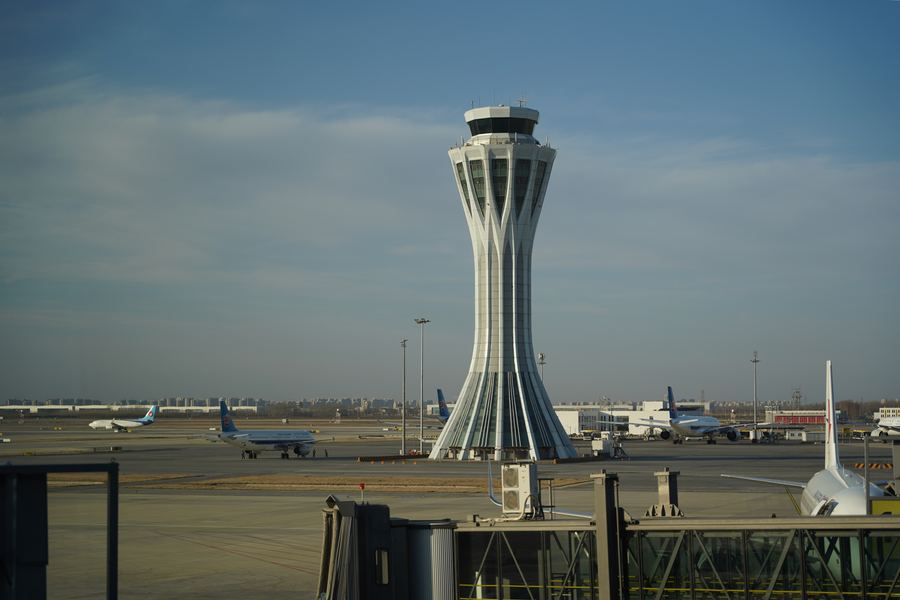
A control tower is typically the tallest structure at an airport, positioned to give controllers an unobstructed visual line of sight across the entire runway and taxiway system. Inside, controllers work at stations equipped with radar displays, radio communication panels, and direct-view windows, monitoring aircraft both visually and electronically as they move through the airport's immediate airspace. Towers are staffed by multiple controllers handling different functions simultaneously, including ground control for taxiing aircraft, local control for takeoffs and landings, and clearance delivery for pre-departure flight plan confirmation. Modern towers increasingly incorporate advanced surface movement radar and digital flight strip systems, supplementing but not replacing the direct visual observation that remains central to tower operations.
Operations
Tower controllers manage a continuous flow of aircraft movement, issuing taxi instructions, takeoff and landing clearances, and traffic sequencing to maintain safe separation between aircraft on the ground and in the immediate airport vicinity. Each aircraft is handed off between different controller positions as it moves through different phases of ground and local airspace operations, with clear verbal confirmation required at each handoff. During periods of high traffic volume, tower controllers must sequence arrivals and departures efficiently to avoid runway congestion, sometimes holding aircraft on taxiways or in the air until a safe gap opens. Towers coordinate closely with nearby radar approach control facilities, handing off aircraft as they climb away from or descend toward the airport beyond the tower's immediate visual range.
See also
References
| Category | Airport & Ground Infrastructure |
| Type | Air traffic control facility |
| First Example | Croydon Airport, UK, 1920 |
| Function | Airport & local airspace control |
| Status | Standard at controlled airports |