Overview
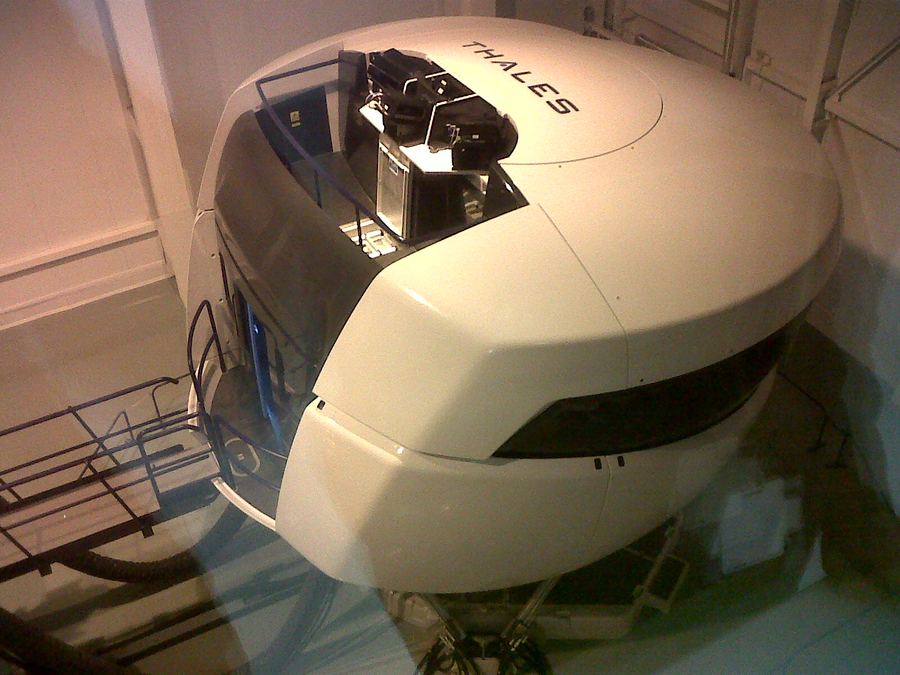
A flight simulator is a device that artificially re-creates aircraft flight and its surrounding environment for pilot training, aircraft design, or research purposes, replicating the equations governing how an aircraft flies, how it responds to control inputs, and how it reacts to external factors such as air density, turbulence, wind shear, and precipitation. Flight simulation serves several distinct purposes, including pilot training, aircraft design and development, and research into aircraft handling characteristics, letting engineers and pilots explore scenarios that would be too dangerous, expensive, or impractical to test in an actual aircraft. Full-flight simulators used for airline pilot training are typically mounted on hydraulic motion platforms and paired with a full-scale replica cockpit, closely replicating the actual sensations and procedures of flying a specific aircraft type. Flight simulation has become central to how pilots train and maintain currency, particularly for emergency procedures that would be far too risky to practice in a real aircraft.
History
Edwin Link developed one of the earliest practical flight training simulators in 1929, the Link Trainer, using a pneumatically driven platform to teach basic instrument flying skills to pilots on the ground. The Link Trainer saw massive adoption during World War II, as military air forces needed to train enormous numbers of pilots quickly and safely, and it became a standard part of pilot training programs worldwide. Flight simulator technology advanced dramatically through the second half of the 20th century, incorporating hydraulic motion platforms, visual projection systems, and eventually fully computerized aircraft flight models that closely replicated an aircraft's actual handling characteristics. Modern full-flight simulators, approved by aviation authorities for use in place of actual aircraft time for many training and certification requirements, now offer such high fidelity that some pilots complete their entire type rating training without ever flying the actual aircraft until their first revenue flight.
Design & Specifications
Full-flight simulators used for professional pilot training are mounted on hydraulic or electric motion platforms capable of six degrees of freedom movement, replicating the physical sensations of acceleration, turbulence, and control inputs. The simulator's cockpit is typically an exact physical replica of a specific aircraft type's flight deck, down to individual switches and displays, ensuring the training transfers directly to the real aircraft. Visual systems project a realistic outside view onto curved screens surrounding the cockpit, simulating everything from specific airports to weather conditions and time of day. Simulator software models the aircraft's precise flight characteristics, engine performance, and system behavior, validated against real aircraft test data to ensure the simulated aircraft handles exactly like the real one.
Operations
Training sessions in a full-flight simulator are typically led by a certified instructor who can inject specific scenarios, such as engine failures or system malfunctions, that would be far too dangerous to practice in an actual aircraft. Airlines and training centers schedule simulator sessions as a core part of both initial type-rating training and recurring proficiency checks required periodically throughout a pilot's career. Simulator instructors monitor and record each session, providing detailed feedback and, for certification checks, formally evaluating whether the pilot meets required performance standards. Because full-flight simulators are extremely expensive to build and operate, training centers typically schedule them intensively across multiple shifts to maximize utilization of each unit.
References
| Category | Avionics & Flight Systems |
| Type | Pilot training device |
| Pioneer | Link Trainer, 1929, Edwin Link |
| Modern Use | Full type-rating training |
| Status | Standard training tool |