
Overview
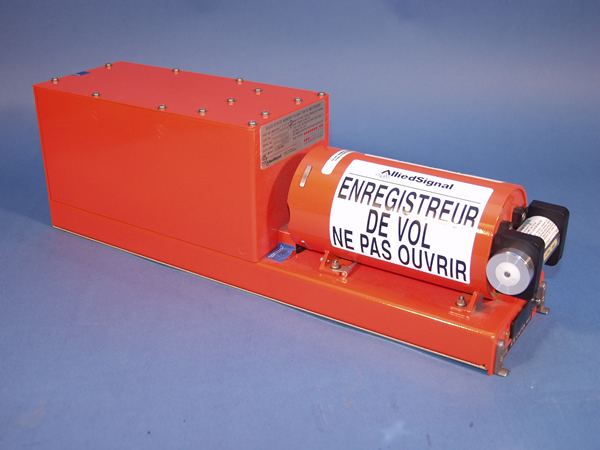
A flight recorder is an electronic recording device installed in an aircraft to help investigators reconstruct the circumstances of aviation accidents and incidents. The device is colloquially known as a “black box,” an outdated and somewhat misleading name, since flight recorders are actually required to be painted bright orange to aid their recovery after an accident. There are two main types of flight recording devices: the flight data recorder, which captures dozens of technical parameters multiple times per second throughout a flight, and the cockpit voice recorder, which captures audio from the cockpit. Modern flight recorders are built to withstand extreme impact forces, fire, and, for recorders used on aircraft that fly over water, prolonged underwater submersion, reflecting how central their data has become to aviation accident investigation and subsequent safety improvements.
History
Australian scientist David Warren developed one of the earliest practical flight data recorders in the 1950s, motivated by his experience investigating a mysterious aircraft crash where no one could determine what had gone wrong in the aircraft's final moments. Early flight recorders captured only a handful of basic parameters, but regulatory requirements for what an FDR must record expanded considerably over subsequent decades as accident investigations repeatedly identified additional data points that would have helped clarify past incidents. Cockpit voice recorders were developed and mandated somewhat later, adding audio context to the technical data already being captured by flight data recorders. Modern flight recorders, built to withstand extreme impact, fire, and underwater submersion, remain a cornerstone of aviation accident investigation, and their data has directly informed countless safety improvements implemented across the industry since their introduction.
Design & Specifications
Flight recorders are constructed with a crash-survivable memory unit, a hardened core encased in materials engineered to withstand extreme impact forces, intense fire, and, for recorders used over water, prolonged deep-sea pressure. The bright orange exterior housing is designed specifically for visibility amid wreckage, and an underwater locator beacon automatically activates on water contact, emitting a sonar-detectable signal for weeks to help searchers locate a submerged recorder. Modern solid-state recorders have replaced older magnetic tape designs, offering greater reliability and storage capacity while eliminating moving parts that could fail under crash conditions. Recorders are typically mounted in the aircraft's tail section, since this area statistically experiences somewhat less severe impact forces than the forward fuselage in many accident scenarios.
Operations
Flight recorders operate continuously throughout every flight from engine start to shutdown, automatically overwriting older data once their recording capacity is reached, so only the most recent flight data and cockpit audio remain stored. After an accident or serious incident, investigators recover the recorders and download their data using specialized equipment at a dedicated accident investigation laboratory. Data recovered from the flight data recorder and cockpit voice recorder is analyzed together, cross-referencing precise technical parameters against crew conversations and communications to reconstruct the sequence of events. Findings from flight recorder analysis routinely drive safety recommendations and regulatory changes, making recorder data one of the most influential tools in improving aviation safety over time.
References
| Category | Avionics & Flight Systems |
| Type | Flight recorder (FDR + CVR) |
| Inventor | David Warren, 1950s |
| Actual Color | Bright orange |
| Status | Mandatory on commercial aircraft |