
Overview
A heliport is a small airport built around one or more helipads, designed for use by helicopters, powered-lift aircraft, and other vertical-lift aircraft, sometimes also offering limited facilities like fuel or hangar space. Early advocates of helicopter travel hoped heliports would become widespread across cities, but they have remained contentious in many urban areas due to the noise generated by helicopter operations overhead. In American usage, a heliport is formally defined as any area of land, water, or structure intended for helicopter landing and takeoff, including its associated buildings and facilities, while a helipad refers more specifically to a single small designated landing area. The broader term “vertiport” has emerged more recently to describe takeoff and landing sites designed for any type of vertically landing aircraft, including the electric vertical takeoff and landing (eVTOL) vehicles now in development.
History
Early heliport development followed closely behind the commercial availability of helicopters in the late 1940s and 1950s, as enthusiasts and city planners envisioned widespread urban helicopter travel. That vision never fully materialized, as noise complaints and safety concerns made helicopter operations increasingly contentious in dense urban areas from the 1960s onward. Heliport development instead concentrated more heavily around hospitals, offshore oil platforms, and other specialized applications where helicopter access offered clear practical advantages over fixed-wing alternatives, a pattern that has remained largely consistent through recent decades.
Design & Specifications
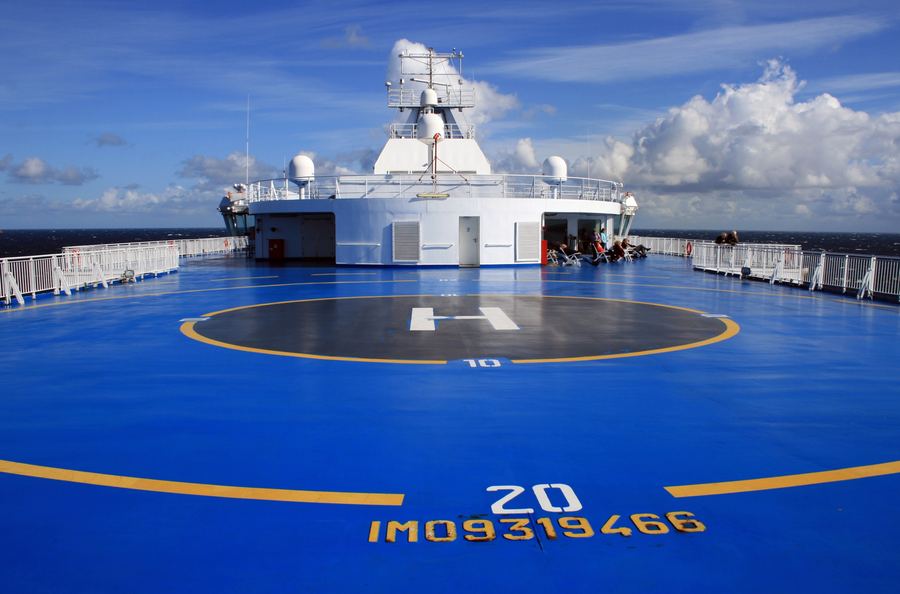
A heliport's core infrastructure centers on one or more helipads, marked landing areas sized and rated for specific helicopter weight classes, often supplemented by basic fueling and parking facilities. Rooftop heliports, common in dense urban areas and at hospitals, are built directly into a building's structure, requiring specific structural reinforcement and safety systems like perimeter netting or firefighting equipment. Offshore heliports serving oil and gas platforms are typically simple elevated helipad platforms with minimal additional infrastructure, designed to withstand harsh marine weather conditions. Emerging vertiport designs for eVTOL aircraft incorporate charging infrastructure alongside traditional helipad features, reflecting the electric propulsion systems these newer aircraft use.
Operations
Helicopter operations at a heliport typically involve more direct, close-in approach and departure paths than fixed-wing airport operations, since helicopters don't require the same runway length or extended approach corridor. Heliport operators coordinate closely with local air traffic control or, at smaller facilities, manage their own informal traffic advisories given the typically low volume of movements. Hospital heliports coordinate tightly with emergency medical staff, since helicopter arrivals often carry critical patients requiring immediate handoff to a waiting medical team. Noise abatement procedures are a significant operational consideration at urban heliports, with operators often required to follow specific approach and departure routes minimizing noise impact on nearby residential areas.
See also
References
| Category | Airport & Ground Infrastructure |
| Type | Helicopter-only airport |
| Related Term | Vertiport (for eVTOL) |
| Common Use | Hospitals, offshore platforms |
| Status | Niche but growing |