
Overview
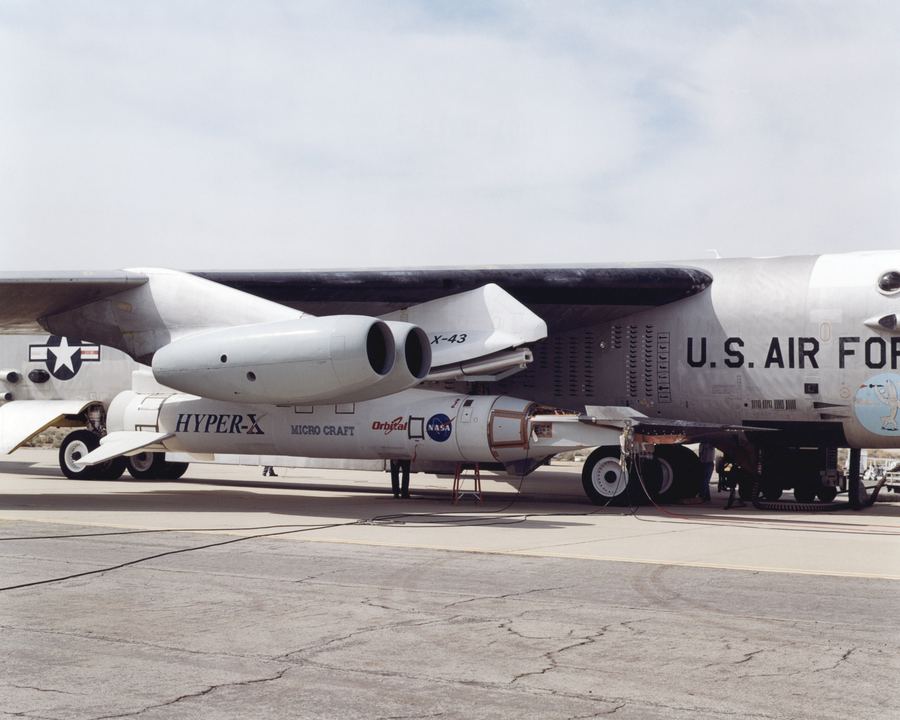
Hypersonic flight refers to atmospheric flight at speeds greater than Mach 5, a threshold above which thermochemical effects and aerodynamic heat loads become significant enough to require specialized materials and design approaches. The first manufactured object to achieve hypersonic flight was the two-stage Bumper rocket, which reached roughly Mach 6.7 during a February 1949 test at White Sands, though the vehicle burned up on reentry with only charred remnants surviving. Hypersonic research has continued for decades since, driven largely by military and space-launch applications, given the extreme technical challenges of managing heat and structural stress at these speeds. As of the mid-2020s, sustained hypersonic atmospheric flight remains a major area of active research and development, with only a handful of vehicles worldwide having successfully demonstrated the capability.
History
The first hypersonic flight was achieved in February 1949 by the two-stage Bumper rocket at White Sands, reaching roughly Mach 6.7 before burning up during reentry. Human hypersonic flight followed in April 1961, when Soviet cosmonaut Yuri Gagarin became the first person to travel at hypersonic speed during his historic orbital spaceflight. Military and space agencies continued hypersonic research through the Cold War and beyond, driven by both space-launch requirements and, more recently, interest in hypersonic weapons systems. Sustained atmospheric hypersonic flight remains an active area of research in the 2020s, as the extreme heat and structural challenges involved continue to limit how long any vehicle can operate at these speeds.
Design & Specifications
Hypersonic vehicles require specialized heat-resistant materials and airframe shapes to survive the extreme aerodynamic heating generated at speeds above Mach 5.
Operations
Hypersonic flights are typically conducted as research or test missions rather than routine operations, given the extreme technical demands and limited number of vehicles capable of sustained hypersonic flight.
See also
References
| Category | Aircraft Types & Categories |
| Type | Flight above Mach 5 |
| First Achieved | Bumper rocket, Feb. 1949 |
| First Human | Yuri Gagarin, 1961 |
| Status | Active research area |