
Overview
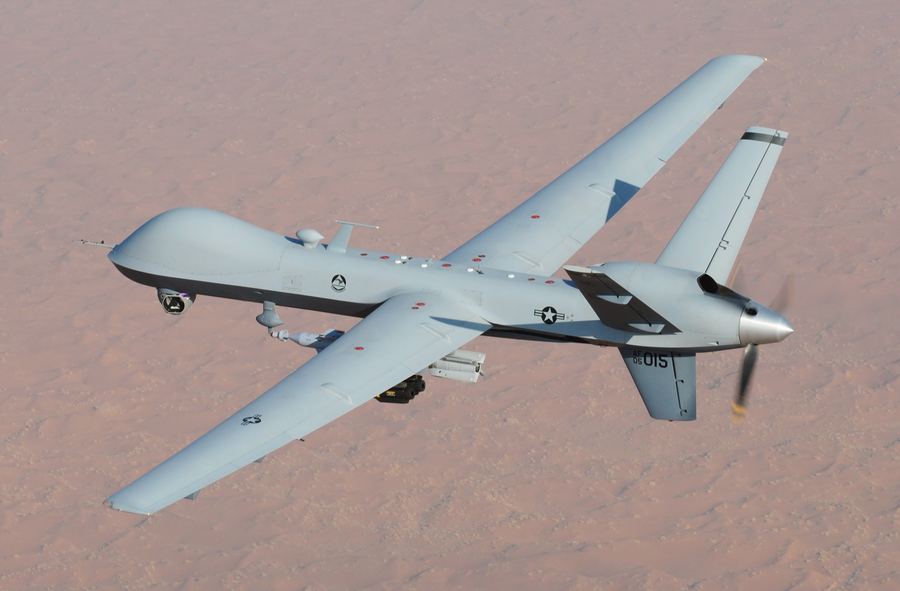
An unmanned aerial vehicle (UAV), or unmanned aircraft system (UAS), commonly known as an aerial drone or simply a drone, is an aircraft with no human pilot, crew, or passengers on board, instead flying autonomously or under remote control. UAVs were originally developed through the 20th century for military missions considered too “dull, dirty, or dangerous” for human pilots, and by the 21st century had become essential assets for most modern militaries. As control technologies improved and costs fell, UAV use expanded well beyond military applications into aerial photography, agricultural monitoring, and countless commercial and recreational uses. Military UAVs today range from small hand-launched reconnaissance drones to large, long-endurance systems like the MQ-9 Reaper, used for both intelligence gathering and, when armed, direct strike missions.
History
Unmanned aircraft development began in the early-to-mid 20th century, initially for military target practice and reconnaissance roles considered too risky for piloted aircraft. Cold War-era military programs significantly advanced drone technology through the second half of the 20th century, developing increasingly capable reconnaissance and, eventually, armed unmanned combat systems by the early 2000s. Civilian and commercial drone use expanded dramatically starting in the 2010s as GPS, battery, and camera technology became small, cheap, and reliable enough for consumer-grade quadcopters. This rapid civilian growth prompted most countries to establish new regulatory frameworks specifically governing drone operation, registration, and airspace access over the course of the 2010s and 2020s.
Design & Specifications
Military UAVs range from small hand-launched reconnaissance drones to large, long-endurance systems carrying sensors or weapons.
Operations
Military UAV operators fly missions from ground control stations, conducting surveillance, reconnaissance, or strike operations as tasked.
See also
References
| Category | Military Aviation & Defense Systems |
| Type | Pilotless military aircraft |
| Origin | Early-mid 20th century |
| Example | MQ-9 Reaper |
| Roles | Reconnaissance + strike |