Overview
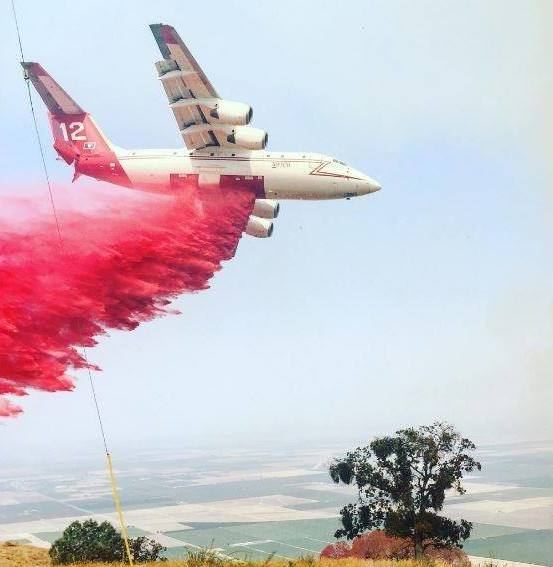
Aerial firefighting, also called waterbombing, uses fixed-wing aircraft and helicopters to drop water, foam, or chemical fire retardant on wildfires, working alongside ground crews rather than as a stand-alone solution. Aircraft range from small single-engine air tankers carrying around 800 gallons up to converted Boeing 747 and DC-10 jetliners capable of dropping well over 10,000 gallons per pass. Purpose-built amphibious scoopers, such as the Canadair CL-415, can skim water directly from lakes and rivers without landing, refilling dozens of times during a single mission. Retardant is typically dropped ahead of a fire's path to slow its spread and create a firebreak for ground crews, rather than dropped directly onto flames, since its cooling effect is short-lived.
History
Aerial firefighting began in the mid-20th century as forestry agencies experimented with dropping water and chemical retardant from converted military and agricultural aircraft. The technique expanded significantly from the 1950s onward as purpose-built air tankers and amphibious scooper aircraft, such as the Canadair CL-215 and later CL-415, entered service specifically for wildfire suppression. Large converted jetliners, including modified Boeing 747 and DC-10 aircraft capable of dropping over 10,000 gallons per pass, joined firefighting fleets from the 1980s and 1990s onward as wildfires grew larger and more frequent in many regions.
Design & Specifications
Air tanker aircraft carry water or fire retardant in internal tanks or externally mounted belly tanks, with drop systems ranging from simple gravity-operated doors to more precise pressurized or computer-controlled release mechanisms. Amphibious scooper aircraft, such as the Canadair CL-415, are built with a specialized hull and water-intake scoops that let them skim across a lake or reservoir at low altitude to refill without ever landing. Retardant is typically a specially formulated slurry, often dyed red or pink so crews can see where it has already been applied. Larger converted airliners used for firefighting, including modified 747 and DC-10 airframes, carry retardant systems mounted in the belly, dramatically increasing single-pass drop capacity.
Operations
A firefighting mission typically begins with the aircraft receiving a target location and drop instructions from an aerial supervisor coordinating the overall firefighting effort. Air tankers fly a specific drop pattern based on wind and terrain, releasing their load in a single controlled pass. Amphibious scoopers can complete a full refill cycle in minutes by skimming a nearby body of water, letting them return to the fire far more quickly than tankers that must land to reload. Coordination between multiple aircraft over the same fire, plus nearby ground crews, requires careful real-time communication to avoid collisions and ensure drops support rather than endanger firefighters.
See also
References
| Category | Special Operations & General Aviation |
| Type | Wildfire suppression |
| Method | Water / retardant drop |
| Key Aircraft | Canadair CL-415, converted 747/DC-10 |
| Status | Active worldwide |