Overview
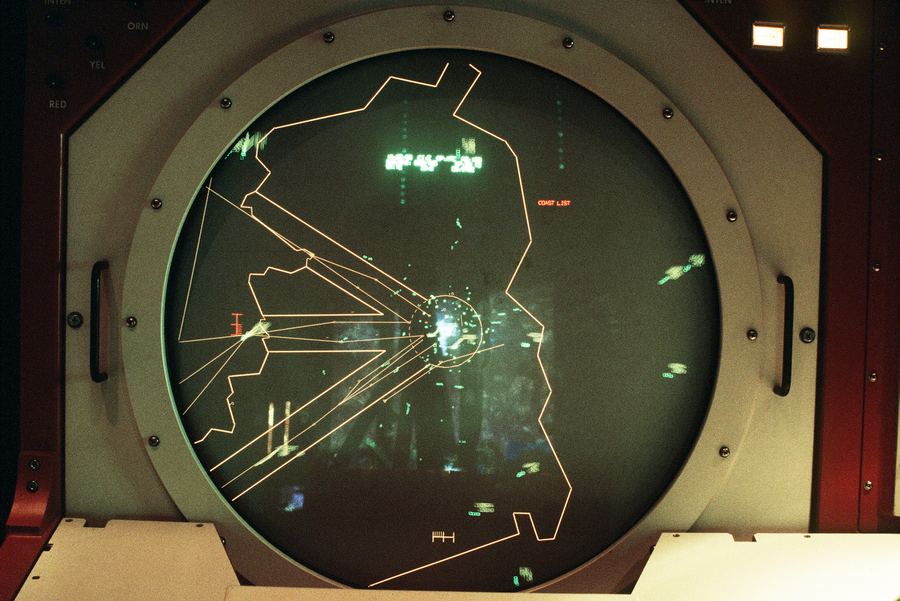
Radar is a system that uses radio waves to determine the distance, direction, and radial velocity of objects relative to the radar site, used to detect and track aircraft, ships, spacecraft, guided missiles, motor vehicles, weather formations, and terrain. The term “RADAR” was coined in 1940 by the United States Navy as an acronym for “radio detection and ranging,” and it has since entered common usage as an ordinary word, losing its original capitalization along the way. In aviation, radar underpins both air traffic control surveillance, letting controllers track aircraft positions in real time, and onboard weather radar, letting pilots identify and avoid hazardous storm cells during flight. Radar technology has continually advanced since its introduction, from the relatively simple systems of World War II to today's highly precise, digitally processed systems capable of distinguishing between aircraft, weather, and terrain with far greater accuracy.
History
Radar technology was developed independently by multiple countries in the years leading up to World War II, with Britain's Chain Home radar network playing a decisive role in detecting incoming aircraft during the Battle of Britain. The term “RADAR” itself was coined by the US Navy in 1940 as an acronym for radio detection and ranging, and the technology saw rapid wartime development as its military value became immediately apparent. Civilian air traffic control adoption of radar began shortly after World War II, as military radar technology was adapted for tracking commercial aircraft and dramatically improved controllers' ability to maintain safe aircraft separation. Radar technology has continued advancing through the following decades, from the relatively simple primary radar systems of the mid-20th century to today's highly precise, digitally processed systems capable of distinguishing between aircraft, weather formations, and terrain with far greater accuracy.
Design & Specifications
Radar systems transmit radio waves and analyze their reflection off objects to determine range, direction, and in weather applications, precipitation intensity.
Operations
Air traffic controllers and pilots use radar for aircraft tracking and weather avoidance respectively, relying on continuously updated returns to make real-time decisions.
See also
References
| Category | Navigation, Meteorology & Rules |
| Type | Radio-based detection system |
| Term Coined | US Navy, 1940 |
| Key WWII Use | Battle of Britain (Chain Home) |
| Aviation Roles | ATC + weather + collision avoidance |