
Overview
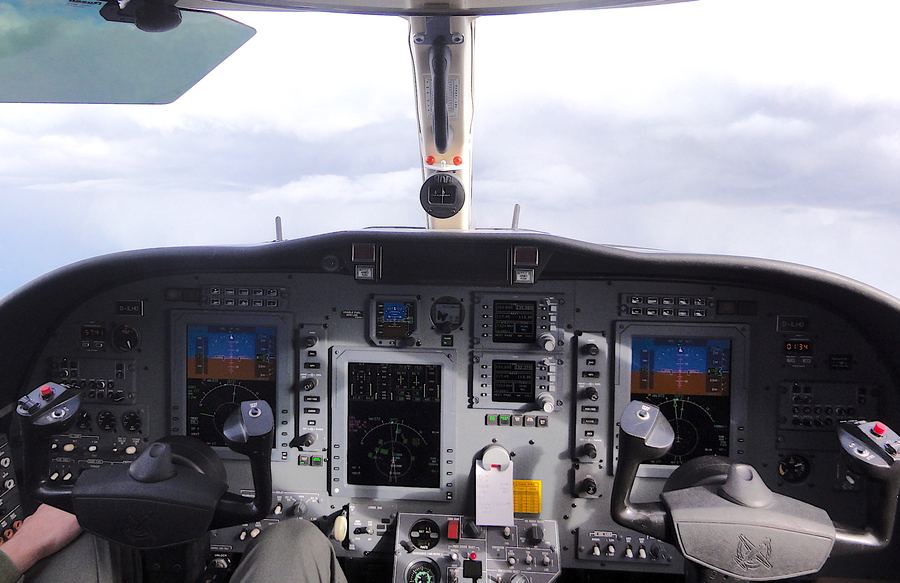
Instrument flight rules (IFR) are one of two sets of regulations governing civil aviation aircraft operations, the other being visual flight rules (VFR). The FAA's Instrument Flying Handbook defines IFR as rules established to govern flight under conditions where flying by outside visual reference isn't safe, meaning IFR flight depends on flying by reference to cockpit instruments, with navigation accomplished using electronic signals rather than visual landmarks. IFR is also used more broadly by pilots and controllers as a term for the type of flight plan an aircraft is operating under, distinct from the specific weather conditions that might require its use. Flying under IFR requires additional pilot certification beyond a basic private pilot license, along with specific aircraft equipment requirements, reflecting the greater complexity and risk involved in navigating and separating traffic without relying on visual reference to the outside world.
History
Instrument flight capability developed significantly during the 1920s and 1930s, as aviators like Jimmy Doolittle demonstrated that an aircraft could be flown safely using only cockpit instruments, without any outside visual reference, in a landmark 1929 flight. Formal instrument flight rules and the certification requirements needed to fly under them were established over subsequent decades as aviation authorities worked to standardize the training and equipment needed for safe instrument flight. Ground-based navigation aids, including VOR beacons developed in the mid-20th century, gave instrument-rated pilots reliable electronic references to navigate by, supplementing the basic attitude and altitude instruments used for aircraft control. GPS-based navigation, which became widely available from the 1990s and 2000s onward, has increasingly supplemented and in some cases replaced older ground-based navigation aids for instrument flight, though the fundamental IFR certification framework has remained broadly consistent for decades.
Design & Specifications
IFR-certified aircraft carry specific navigation and communication equipment required for flight without outside visual reference, verified through aircraft certification and pilot training.
Operations
Pilots flying under IFR navigate primarily by instruments and follow air traffic control routing and clearances throughout the flight, particularly in low-visibility conditions.
References
| Category | Navigation, Meteorology & Rules |
| Type | Instrument-based flight regulation |
| Milestone Flight | Jimmy Doolittle, 1929 |
| Requires | Additional certification |
| Alternative | Visual Flight Rules (VFR) |