Overview
In meteorology, clear-air turbulence (CAT) is turbulent air movement occurring without any visual warning signs such as clouds, caused when air masses moving at significantly different speeds meet. The atmospheric region most susceptible to CAT is the upper troposphere, at altitudes of roughly 23,000 to 39,000 feet where it meets the tropopause, and CAT is most frequently encountered near jet streams, though it can also occur at lower altitudes near mountain ranges. Because CAT produces no visible warning signs like clouds, pilots often cannot see or anticipate it in advance, making a sudden encounter potentially hazardous to passenger comfort and, in more severe cases, to safety. Thin cirrus clouds can sometimes indicate an elevated probability of nearby CAT, and modern turbulence forecasting tools help airlines route flights around known high-risk areas, though clear-air turbulence remains inherently harder to predict than turbulence associated with visible weather systems.
History
Clear-air turbulence gained increasing attention from aviation researchers in the 1950s and 1960s, as jet aircraft began flying at the higher altitudes where CAT is most commonly encountered, well above where earlier propeller aircraft typically operated. Several serious CAT-related incidents through the 1960s and 1970s drove increased research investment into understanding and forecasting the phenomenon, since CAT's lack of visual warning signs made it particularly hazardous compared to storm-related turbulence. Turbulence forecasting technology improved substantially from the 1980s onward as meteorologists developed better models linking jet stream position and wind shear patterns to CAT probability. Modern turbulence forecasting and pilot report sharing systems have significantly improved airlines' ability to route around known high-CAT-probability areas, though clear-air turbulence remains inherently more difficult to predict and avoid than turbulence associated with visible weather systems.
Design & Specifications
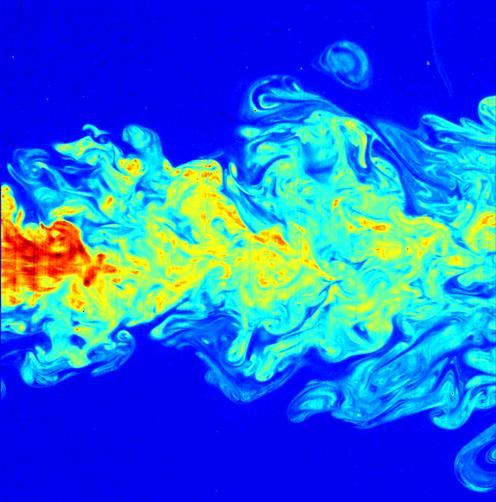
Clear air turbulence forms where air masses of differing speed meet, typically near jet streams at high altitude, without any associated visible cloud formation.
Operations
Pilots rely on turbulence forecasts and reports from other aircraft to anticipate and route around likely CAT areas, since the phenomenon offers no visual warning.
See also
References
| Category | Navigation, Meteorology & Rules |
| Type | Turbulence without visual warning |
| Typical Altitude | 23,000-39,000 ft |
| Common Cause | Jet stream wind shear |
| Detectability | Difficult; no visual cues |