
Overview
A transponder — short for transmitter-responder, and often abbreviated XPDR or TPDR — is an electronic device that produces a response when it receives a radio-frequency interrogation signal. Aircraft carry transponders specifically to help identify themselves on air traffic control radar, and collision avoidance systems like TCAS have been developed to use transponder transmissions as a way to detect nearby aircraft at risk of colliding. Air traffic controllers use the term “squawk” when assigning an aircraft a specific transponder code, a four-digit identifier the pilot enters into the transponder to help controllers distinguish that aircraft from others on their radar display. Certain transponder codes are reserved internationally for specific situations, such as 7700 for a general emergency or 7500 for indicating a hijacking, letting a pilot silently alert air traffic control to a serious situation without needing to communicate it directly over the radio.
History
Transponder technology traces back to radar identification systems developed during World War II, when Allied forces needed a reliable way to distinguish friendly aircraft from enemy aircraft on radar displays, a system known as IFF, or identification friend or foe. Civilian aviation adoption of transponder technology grew through the 1950s and 1960s as secondary surveillance radar became the standard method for air traffic controllers to track and identify aircraft more precisely than primary radar alone allowed. Standardized four-digit transponder codes, including internationally reserved emergency codes like 7700 and 7500, were established over subsequent decades to give pilots a consistent way to communicate specific situations to air traffic control without needing voice communication. Modern Mode S transponders, which can transmit additional digital data beyond a simple identification code, have become increasingly standard as aviation surveillance technology has continued advancing toward more data-rich systems like ADS-B.
Design & Specifications
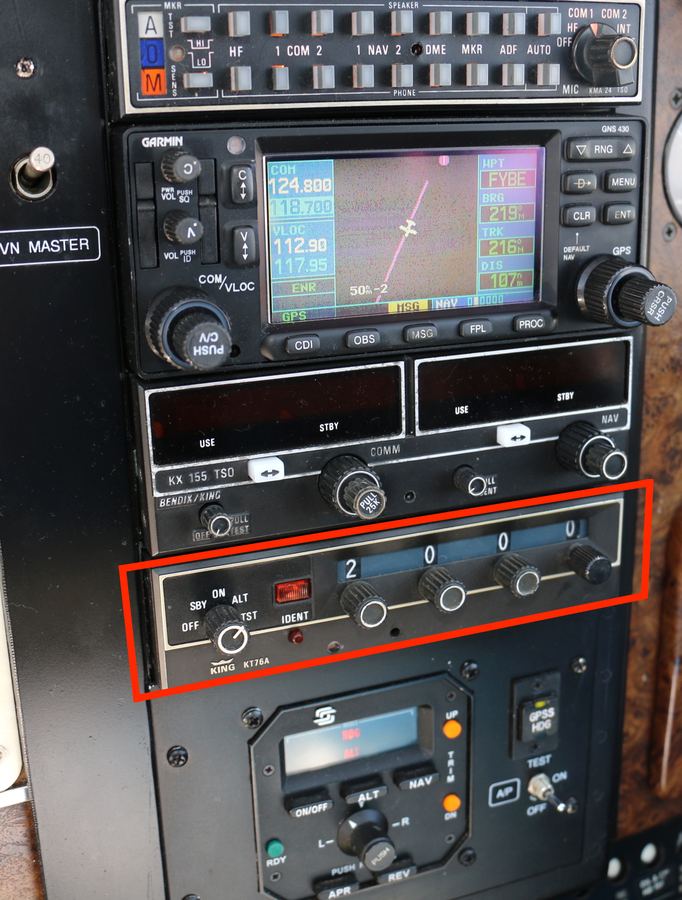
A transponder receives an interrogation signal from a ground radar station or another aircraft's TCAS unit and automatically replies with the aircraft's assigned four-digit code and, in most modern installations, altitude information as well. Mode S transponders, now standard on most commercial and many general aviation aircraft, can transmit additional digital data beyond the basic identification code, supporting more advanced surveillance applications like ADS-B. Transponder units are typically mounted in the avionics bay with a control head accessible to the pilot in the cockpit, letting the crew enter the assigned code and select the appropriate operating mode. Redundant transponder installations are common on larger aircraft, ensuring continued radar and TCAS visibility even if one unit fails during flight.
Operations
Pilots set their assigned transponder code, given to them by air traffic control at various points during a flight, using the cockpit control head, and select the appropriate mode based on their current phase of flight. Special emergency codes, including 7700 for a general emergency and 7500 to silently indicate a hijacking, can be entered by the pilot to alert air traffic control to a serious situation without requiring voice communication. Controllers rely on transponder returns to identify and track individual aircraft on their radar displays, distinguishing one aircraft from another far more precisely than primary radar reflections alone would allow. Transponder function is verified during routine aircraft inspections, since a malfunctioning transponder can significantly degrade both air traffic control surveillance and TCAS collision protection for that aircraft.
References
| Category | Avionics & Flight Systems |
| Type | Radar identification device |
| Origin | WWII “IFF” systems |
| Emergency Codes | 7700 (emergency), 7500 (hijack) |
| Status | Mandatory in controlled airspace |