
Overview
Avionics, a portmanteau of “aviation” and “electronics,” refers to the electronic systems used on aircraft, spanning communications, navigation, multi-system displays and management, and the hundreds of specialized systems fitted to modern aircraft to perform individual functions. These systems range from something as simple as a searchlight on a police helicopter to something as complex as the tactical mission system aboard an airborne early warning aircraft. The term itself was coined in 1949 by Philip J. Klass, a senior editor at Aviation Week & Space Technology magazine, combining “aviation” and “electronics” into a single word that quickly became industry standard terminology. Avionics has grown to represent an increasingly large share of a modern aircraft's overall cost and capability, as electronic systems have taken over functions once handled by purely mechanical instruments and manual pilot judgment.
History
The term “avionics” was coined in 1949 by Philip J. Klass, a senior editor at Aviation Week & Space Technology magazine, combining “aviation” and “electronics” into a single word that quickly became standard industry terminology. Early avionics systems in the mid-20th century were relatively simple, covering basic radio communication and navigation equipment, but grew rapidly more sophisticated through the Cold War era as military aircraft demanded increasingly advanced radar, targeting, and electronic warfare systems. The transition from analog to digital avionics through the 1970s and 1980s transformed the field, enabling the glass cockpit displays and integrated flight management systems that became standard on new aircraft from the 1980s onward. Avionics has continued to represent an increasingly large share of a modern aircraft's total value and capability, as electronic systems have taken over functions once handled by purely mechanical instruments and manual pilot judgment.
Design & Specifications
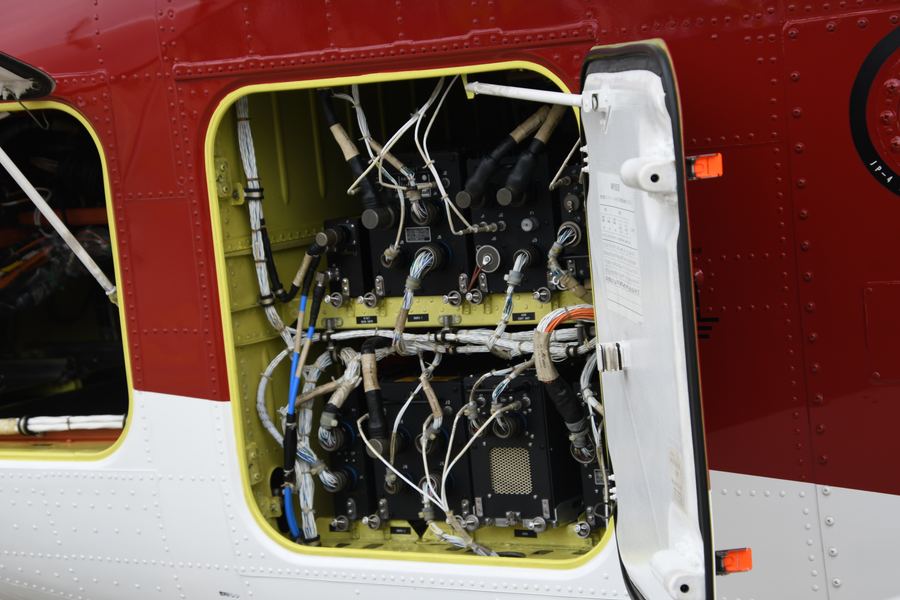
Modern avionics systems are built around a networked digital architecture, with individual components such as navigation radios, flight displays, and communication systems all connected via data buses that let them share information continuously. Redundancy is a core design principle throughout aircraft avionics, with critical systems typically duplicated or triplicated so a single component failure doesn't compromise the aircraft's overall safety. Avionics bays, usually located beneath the cockpit or in the aircraft's nose section, house the physical computers and processing units that power the various avionics functions, protected from temperature extremes and vibration. Software updates and certification processes for avionics systems are tightly regulated, since even minor software changes must be verified not to introduce unintended behavior in safety-critical systems.
Operations
Flight crews interact with avionics systems continuously throughout a flight, programming navigation routes, monitoring system status displays, and responding to any alerts or warnings the avionics suite generates. Avionics technicians perform scheduled inspections and troubleshooting using specialized ground test equipment that can interface directly with an aircraft's avionics systems without requiring the aircraft to be in flight. Airlines and manufacturers continuously collect avionics performance and fault data from aircraft in service, using it to identify recurring issues and inform future software or hardware updates. Because avionics increasingly represents such a large share of an aircraft's total capability and value, avionics upgrades are a common way operators extend the useful service life of older airframes.
See also
References
| Category | Avionics & Flight Systems |
| Type | Aircraft electronic systems |
| Term Coined | 1949, by Philip J. Klass |
| Scope | Comms, nav, displays, mission systems |
| Status | Growing share of aircraft value |