Overview
An autopilot is a system used to control an aircraft's flight path without requiring constant manual intervention from a human pilot, assisting rather than replacing the crew by letting them focus on broader operational concerns such as monitoring trajectory, weather, and onboard systems. Autopilots are often used together with an autothrottle, a related system that automatically controls the power delivered by the aircraft's engines. In the earliest days of aviation, aircraft demanded a pilot's continuous, undivided attention to fly safely, which became increasingly impractical as aircraft range and flight duration grew. Modern autopilot systems can manage nearly every phase of flight, including takeoff, cruise, and in some cases landing, though pilots remain legally responsible for monitoring the aircraft and are trained to intervene immediately if the automation behaves unexpectedly.
History
Elmer Sperry developed one of the earliest practical autopilot systems in 1912, using a gyroscopic stabilizer to let an aircraft maintain level flight without constant pilot input, a breakthrough demonstrated dramatically in a 1914 public flight. Autopilot technology advanced significantly through the mid-20th century as aircraft range and flight duration increased, making the ability to fly hands-off for extended periods increasingly valuable for reducing pilot fatigue on long routes. Autopilot capability expanded substantially from the 1960s onward with the integration of electronic flight control and, later, digital computer systems, letting autopilots manage increasingly complex phases of flight including automated approach and landing. Modern autopilot systems, tightly integrated with flight management computers and GPS navigation, can now manage nearly an entire flight from shortly after takeoff through landing, though pilots remain legally responsible for monitoring the aircraft throughout.
Design & Specifications
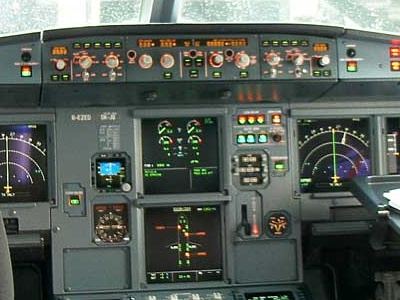
A modern autopilot system integrates with the aircraft's flight control surfaces, engine controls, and navigation systems, receiving guidance commands from the flight management computer and translating them into precise control inputs. Autopilot modes range from basic wing-leveling and altitude-hold functions on simpler aircraft to full flight-path management on modern airliners, capable of flying a pre-programmed route from shortly after takeoff through an automated landing. Redundant sensors and computer systems back up critical autopilot functions, since a malfunction during automated flight could otherwise put the aircraft in an unsafe attitude without immediate pilot awareness. Autothrottle systems typically work alongside the autopilot, automatically adjusting engine power to maintain a commanded speed or descent profile without requiring separate manual throttle input.
Operations
Pilots engage the autopilot after takeoff once the aircraft has reached a safe altitude, programming the flight management system with the intended route, altitudes, and speeds for the autopilot to follow throughout the flight. During cruise, pilots continuously monitor the autopilot's performance against the flight plan, remaining ready to intervene manually if the aircraft deviates unexpectedly or air traffic control issues a new instruction. Approach and landing procedures increasingly rely on autopilot guidance, particularly during low-visibility conditions where a fully automated landing may be required to safely bring the aircraft down. Pilots are trained extensively in autopilot disconnection and manual recovery procedures, since regulations require crews to remain capable of safely flying the aircraft by hand if the automation fails or behaves unexpectedly.
See also
References
| Category | Avionics & Flight Systems |
| Type | Automated flight control system |
| Inventor | Elmer Sperry, 1912 |
| Modern Capability | Nearly full-flight automation |
| Status | Standard on most aircraft |