Overview
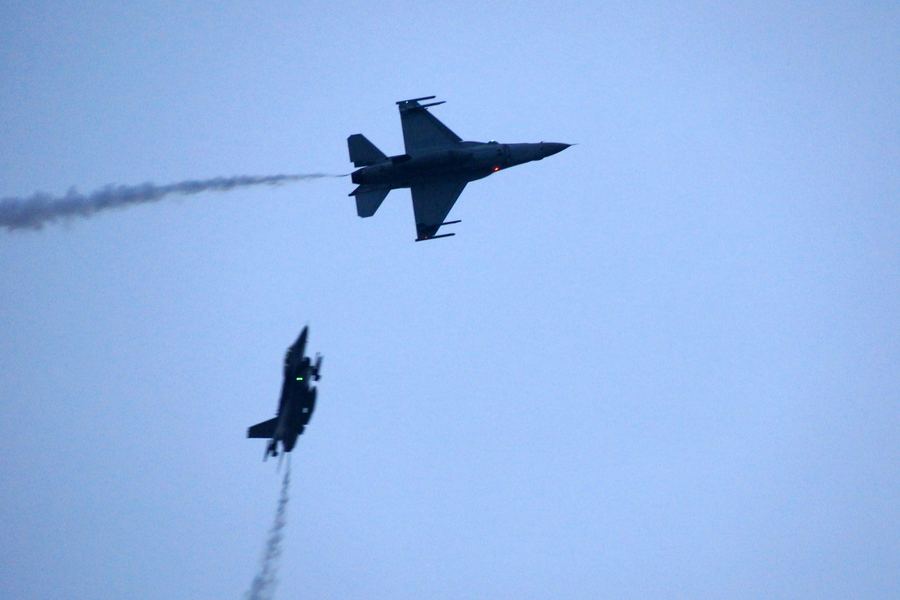
Aerobatics is the practice of flying maneuvers involving aircraft attitudes not used in conventional passenger-carrying flight, performed for training, recreation, entertainment, or competitive sport; the term itself is a portmanteau of “aeroplane” and “acrobatics.” Most aerobatic maneuvers rotate the aircraft around its longitudinal roll axis or lateral pitch axis, while others, such as a spin, displace it around its vertical yaw axis, and individual maneuvers are often combined into complete sequences for competition or air show performances. Aerobatic flying demands a broader set of piloting skills than normal flight, since it involves aircraft attitudes and load factors well outside standard operating conditions. Military and civilian aerobatic display teams, such as Italy's Frecce Tricolori, showcase these skills publicly, while dedicated competitive aerobatics remains an internationally judged sport with standardized maneuver catalogs.
History
Aerobatic flying began almost as soon as powered flight itself, with pilots in the 1910s discovering that maneuvers like loops and rolls, while initially accidental, could be performed deliberately and safely with the right technique. Military flight training incorporated aerobatic maneuvers early on, since the same skills used for show flying also proved essential for evading enemy aircraft in aerial combat during World War I. Competitive aerobatics developed into a formal international sport through the 20th century, with standardized maneuver catalogs and judging criteria established to let pilots and aircraft be compared fairly across competitions. Modern aerobatic display teams, both military and civilian, have become a centerpiece of air shows worldwide, showcasing precision formation flying that traces its technical roots directly back to those early 20th-century aerobatic pioneers.
Design & Specifications
Aerobatic aircraft are built with reinforced airframes rated for higher G-forces than standard aircraft, along with specific control surface sizing for rapid maneuvering.
Operations
Pilots practice aerobatic sequences at safe altitude before performing them in competition or air shows, following strict safety margins and boundaries.
References
| Category | Aviation Business & Pilot Operations |
| Type | Flight maneuver discipline |
| Term Origin | Portmanteau: aeroplane + acrobatics |
| Notable Team | Frecce Tricolori, Italy |
| Status | Competitive sport + air show staple |