
Overview
An airport terminal is the main building at an airport where passengers transfer between ground transportation and the facilities that let them board or disembark from an aircraft. The structures that provide direct access to aircraft via gates are typically called concourses, though the terms “terminal” and “concourse” are often used interchangeably depending on a given airport's layout; smaller airports usually have a single terminal handling all functions, while larger airports may have multiple terminals connected to one or several concourses. By the late 20th century, large airport terminals had become architectural symbols of a city or country's modernity and prosperity, prompting many airports to invest heavily in distinctive, high-profile terminal designs. Terminal capacity and layout are major factors in how efficiently an airport can process passengers, particularly at hub airports handling large volumes of connecting traffic.
History
Early airport terminals were simple, functional buildings, but by the mid-20th century, as air travel became more accessible to the general public, terminals began taking on greater architectural significance. The jet age of the late 1950s and 1960s drove a wave of ambitious terminal construction as airports needed far more capacity to handle growing passenger volumes and larger aircraft. By the late 20th century, large airport terminals had become symbols of national and civic prestige, prompting many countries to commission internationally recognized architects for major terminal expansion projects.
Design & Specifications
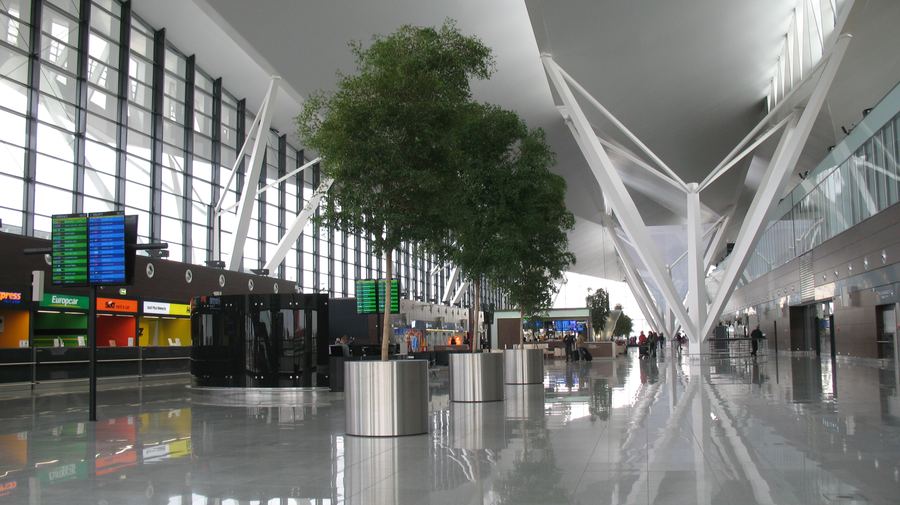
Terminal buildings are organized around a sequential passenger flow, from check-in and baggage drop, through security screening, to a departure concourse containing gates, retail, and dining facilities. Larger terminals often use a pier or satellite concourse design, extending outward from a central terminal building to maximize the number of aircraft gates that can be served. Terminal architecture increasingly incorporates natural light, high ceilings, and prominent design features intended to create a memorable arrival and departure experience for passengers. Behind the scenes, terminals house extensive baggage handling infrastructure, security operations centers, and airline operational offices supporting the visible passenger-facing areas.
Operations
Terminal operations require close coordination between airport authorities, individual airlines, security agencies, and retail and food service concessionaires, all operating within the same shared facility. Passenger flow through the terminal is closely monitored and managed, with staff adjusting security lane staffing, gate assignments, and wayfinding signage based on real-time passenger volume. During disruptions such as widespread flight delays, terminal staff coordinate with airlines to manage large numbers of affected passengers, sometimes activating additional customer service resources or rebooking stations. Terminal capacity planning is an ongoing operational concern for busy airports, since passenger volume growth can outpace a terminal's original design capacity, requiring expansion or renovation projects.
See also
References
| Category | Airport & Ground Infrastructure |
| Type | Passenger processing building |
| Function | Ground-to-aircraft transfer |
| Notable Trend | Architectural prestige projects |
| Status | Core airport infrastructure |