
Overview
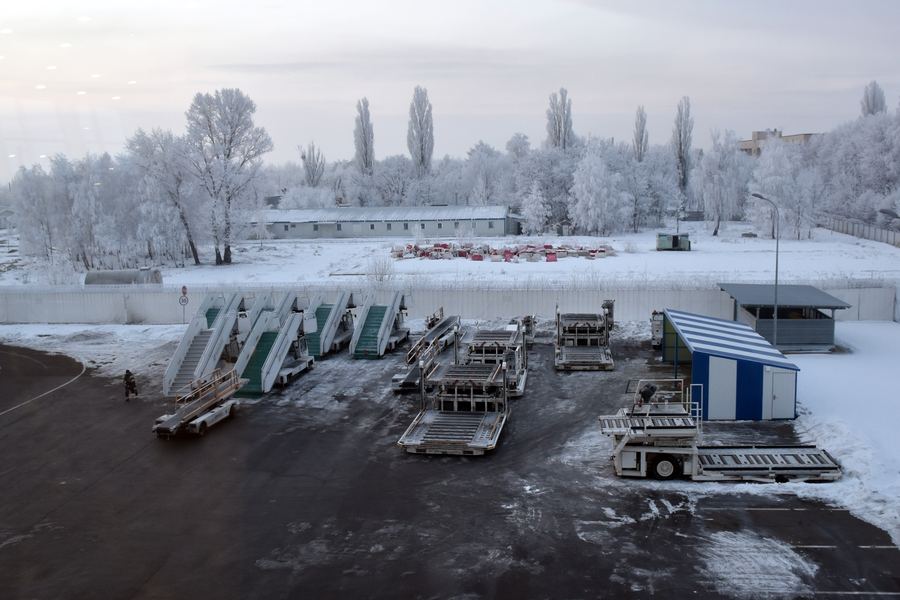
Ground support equipment (GSE) is the collective term for the specialized vehicles and machinery found at an airport, usually on the apron near the terminal, used to service aircraft between flights — covering ground power supply, aircraft towing and mobility, and cargo or passenger loading operations. Many airlines subcontract this ground handling work to the airport operator, a dedicated handling agent, or even another airline, since coordinating these services quickly and accurately is essential to minimizing how long an aircraft sits parked at the gate. Common categories of GSE include pushback tugs, baggage and cargo loaders, ground power units, air-start units, and de-icing trucks, each handling a distinct part of an aircraft's turnaround. Because turnaround time directly affects an airline's schedule and costs, ground handling operations place heavy emphasis on speed, coordination, and safety around parked aircraft.
History
Ground support equipment developed alongside commercial aviation itself, as airlines needed specialized vehicles to service aircraft that couldn't be handled by ordinary road vehicles or manual labor alone. The range of dedicated GSE expanded significantly through the mid-20th century as aircraft grew larger and more complex, requiring purpose-built tugs, loaders, and power units suited to specific aircraft types. Outsourcing ground handling to dedicated service providers became increasingly common from the 1970s onward, as airlines sought to standardize turnaround procedures and control costs across the many airports they served.
Design & Specifications
Ground support equipment spans a wide range of specialized vehicles, including pushback tugs, baggage and cargo loaders, ground power units that supply electrical power to a parked aircraft, and air-start units that provide compressed air to start engines without relying on the aircraft's own systems. Each piece of equipment is designed to interface precisely with specific aircraft connection points, requiring ground crews to use correctly matched equipment for each aircraft type they service. Modern GSE fleets increasingly incorporate electric-powered equipment, reducing emissions and noise on the ramp compared to older diesel-powered vehicles. Airports and ground handling companies maintain GSE fleets through dedicated maintenance programs, since equipment failures can directly delay aircraft turnarounds and cascade into broader schedule disruptions.
Operations
Ground crews coordinate the use of multiple GSE vehicles simultaneously around a single parked aircraft during turnaround, timing pushback tugs, loaders, and power units to avoid interfering with each other in the confined ramp space. Ground power units are typically connected as soon as an aircraft parks, letting the flight crew shut down engines while maintaining electrical power to cabin systems during the turnaround. Baggage and cargo loaders operate on a tight schedule tied to the aircraft's overall turnaround time, working to unload arriving baggage and load departing baggage within the allotted window. Ramp supervisors oversee the coordination of all GSE activity around each aircraft, ensuring the various ground service tasks are completed safely and within the scheduled turnaround time.
References
| Category | Airport & Ground Infrastructure |
| Type | Aircraft turnaround vehicles/tools |
| Examples | Tugs, loaders, power units |
| Operated By | Airline, airport, or handling agent |
| Status | Standard worldwide |