
Overview
A duty-free shop is a retail outlet whose goods are exempt from certain local or national taxes and duties, on the condition that the products are sold to travelers who will take them out of the country. Exactly which products qualify for duty-free sale, and how the tax exemption is calculated or refunded, varies significantly from one jurisdiction to another. According to the Tax Free World Association, the Asia-Pacific region accounted for roughly 35% of global duty-free and travel retail sales in a recent measured year, ahead of Europe and the Americas, with fragrances and cosmetics representing the single largest product category. Some countries still apply duties on goods brought in even if they were purchased duty-free elsewhere, depending on the traveler's personal exemption limits and the destination country's tariff rules.
History
Duty-free retail began in 1947 at Shannon Airport in Ireland, widely credited as the world's first duty-free shop, created specifically to serve transatlantic passengers making refueling stops. The concept spread rapidly to major airports worldwide through the 1950s and 1960s as international air travel expanded and airports recognized the retail revenue potential of tax-exempt sales to departing travelers. Duty-free became a major global retail category by the late 20th century, with fragrances, cosmetics, and alcohol emerging as the dominant product categories, and industry trade groups like the Tax Free World Association tracking billions of dollars in annual sales across the sector.
Design & Specifications
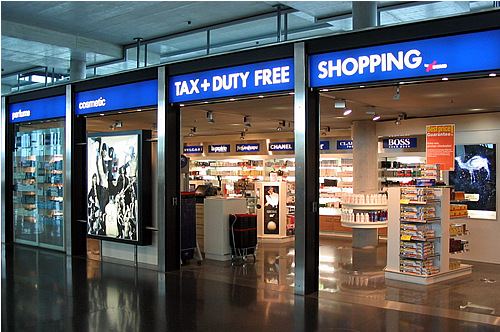
Duty-free shops are physically located within an airport's secure area, typically positioned along the route passengers walk between security screening and their departure gate to maximize foot traffic. Store layouts and product selection are tailored to the airport's typical passenger demographics, with larger international hubs often stocking a wider range of luxury goods than smaller regional airports. Because duty-free purchases are exempt from certain taxes, retailers must maintain careful inventory and sales tracking systems to remain compliant with each country's specific duty-free regulations. Many duty-free operators are large multinational retail companies operating stores across dozens of airports worldwide under long-term concession agreements with airport authorities.
Operations
Passengers typically shop at duty-free stores after clearing security screening but before boarding, browsing and purchasing items during their layover or pre-departure wait time. Purchases are usually handed to the customer immediately, though some airports use a collection-point system where duty-free items ordered online in advance are picked up just before boarding. Staff verify that passengers are eligible for duty-free purchase based on their destination and ticket, since exemption rules vary depending on where a passenger is traveling to. Airport authorities and retailers continuously analyze passenger traffic patterns and dwell time to optimize store placement, layout, and staffing throughout the day.
See also
References
| Category | Airport & Ground Infrastructure |
| Type | Tax-exempt airport retail |
| First Shop | Shannon Airport, Ireland, 1947 |
| Top Category | Fragrances & cosmetics |
| Top Region | Asia-Pacific (~35% of sales) |