
Overview
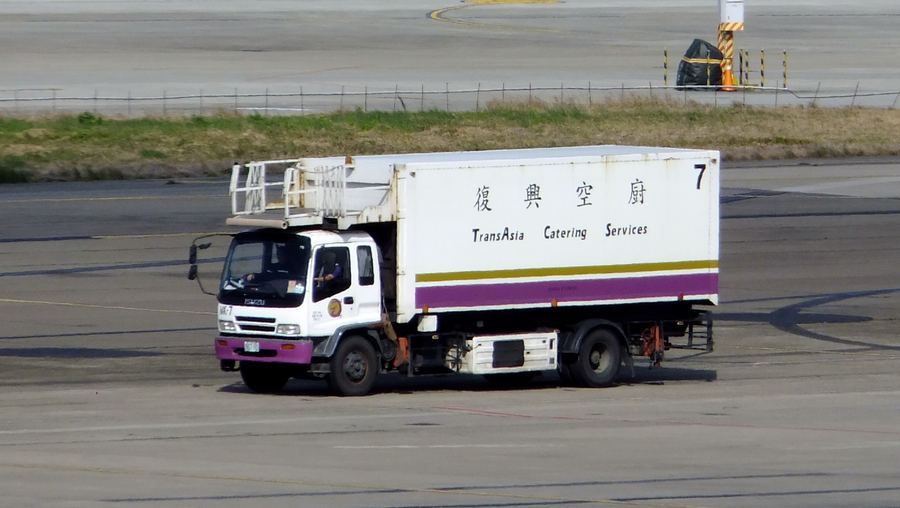
Ground support equipment (GSE) is the collective term for the specialized vehicles and machinery used at an airport, usually on the apron near the terminal, to service aircraft between flights, covering everything from ground power and aircraft towing to cargo and passenger loading. Catering trucks are one specific category of this equipment, built with a scissor-lift platform that raises a galley service body up to an aircraft's cabin door height so crews can load and unload food and beverage carts. Many airlines subcontract this kind of ground handling work to the airport itself, a dedicated handling agent, or even another airline, since speed and accuracy during each aircraft's turnaround directly affect how quickly it can depart again. Because turnaround time is such a critical cost factor for airlines, ground service providers place heavy emphasis on coordinating catering, cleaning, fueling, and baggage operations to happen efficiently and in parallel.
History
In-flight catering developed alongside early commercial passenger service in the 1920s and 1930s, initially involving simple food service loaded manually onto aircraft. Specialized catering trucks with scissor-lift platforms were developed by the mid-20th century as aircraft cabin doors rose higher off the ground and catering volumes grew too large for manual loading to remain practical. Ground handling of catering services became increasingly outsourced to dedicated handling agents from the 1970s onward, as airlines sought to standardize turnaround procedures and reduce the time aircraft spent parked at the gate.
Design & Specifications
Catering trucks feature a scissor-lift platform mounted on a truck chassis, raising an enclosed galley service body up to the aircraft's cabin door height for direct loading of food and beverage carts. The service body is designed to dock flush against the aircraft's galley door, letting catering staff transfer carts directly between the truck and the aircraft without carrying items by hand across the ramp. Trucks used for wide-body aircraft feature a taller lift range and larger service body than those built for narrow-body or regional aircraft, reflecting the different door heights and catering volumes involved. Refrigeration units built into the truck's service body keep perishable food items at safe temperatures during the loading process.
Operations
Catering operations begin well before an aircraft's scheduled departure, with ground catering staff preparing meal carts and beverage supplies at a dedicated catering facility, often located off the airport itself. The loaded catering truck arrives at the aircraft during its scheduled turnaround, coordinating its access with other ground service vehicles working simultaneously around the same aircraft. Catering crews exchange empty carts and trash from the previous flight for freshly loaded carts, working within the tight time window allotted for the aircraft's overall turnaround. Precise timing is essential, since catering must be completed before the cabin crew's final pre-departure checks, but not so early that food quality or temperature is compromised by extended dwell time aboard the aircraft.
See also
References
| Category | Airport & Ground Infrastructure |
| Type | Ground support equipment |
| Function | Galley loading via scissor-lift |
| Operated By | Airline, airport, or handling agent |
| Status | Standard equipment |