
Overview
An airport is an aerodrome with extended facilities, primarily built to support commercial air transport, typically including at least one active runway or helipad along with supporting buildings such as control towers, hangars, and passenger terminals. Larger airports expand on this basic structure with aprons, taxiway bridges, air traffic control centers, and passenger amenities like restaurants and lounges, and in the United States many also host fixed-base operators serving general aviation. Airport operations are highly complex, coordinating aircraft support services, passenger processing, and air traffic control within a single site, which makes major airports significant employers and economic hubs for their surrounding regions. The scale and complexity of airport infrastructure varies enormously, from small single-runway aerodromes serving general aviation to sprawling international hubs handling tens of millions of passengers a year.
History
The earliest airports were simple grass fields used by pioneer aviators in the 1900s and 1910s, with little more than a windsock and a clear landing area. Airport infrastructure expanded rapidly following both World Wars, as surplus military airfields were converted to civilian use and rising passenger demand justified paved runways, control towers, and dedicated terminal buildings. The jet age, beginning in the late 1950s, drove another major wave of airport expansion, as longer runways and larger terminals were needed to accommodate bigger, faster aircraft carrying far more passengers than earlier propeller-driven airliners.
Design & Specifications
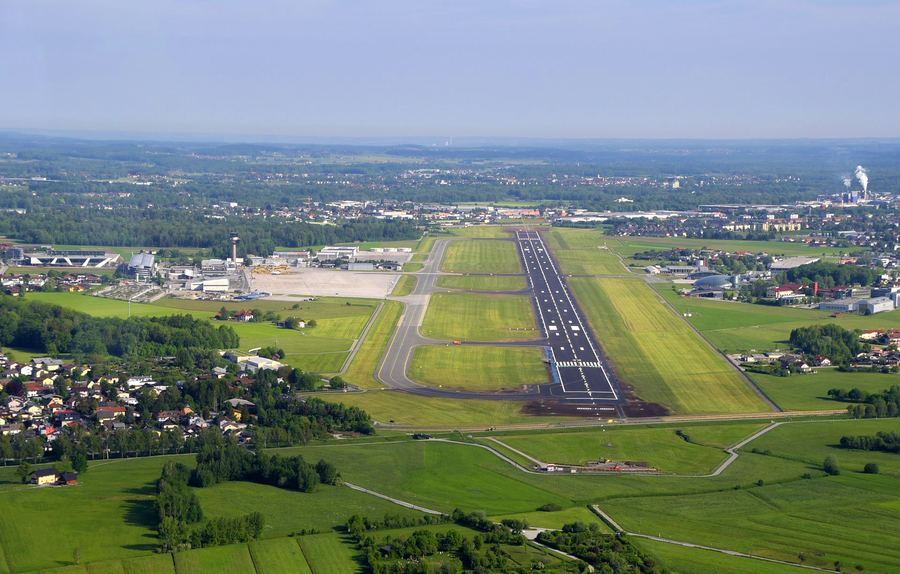
An airport's core physical layout centers on one or more runways, connected by taxiways to an apron area where aircraft park at gates or remote stands for passenger and cargo handling. Passenger terminals house check-in counters, security screening, gates, and often retail and lounge facilities, while separate cargo terminals handle freight operations away from passenger traffic. Air traffic control towers, positioned for maximum visibility over the airfield, coordinate aircraft movement on the ground and through the airport's local airspace. Supporting infrastructure includes fuel storage and delivery systems, fire and rescue services, and increasingly extensive ground transportation connections linking the airport to surrounding roads and rail.
Operations
Airport operations run around continuous coordination between air traffic control, airline ground staff, and airport operations teams, managing everything from runway scheduling to gate assignment throughout the day. Ground handling companies service each arriving aircraft, coordinating fueling, baggage, catering, and cleaning within the tight turnaround window airlines schedule between flights. Airport authorities monitor and maintain runway and taxiway surfaces continuously, since even minor surface damage can pose a serious hazard to landing and departing aircraft. During adverse weather, airports activate de-icing operations, adjust runway usage for wind conditions, or in severe cases suspend operations entirely until conditions improve.
References
| Category | Airport & Ground Infrastructure |
| Type | Aviation infrastructure facility |
| Core Features | Runway, terminal, tower |
| Scale Range | Single-runway to major hub |
| Regulated By | National aviation authority |