
Overview
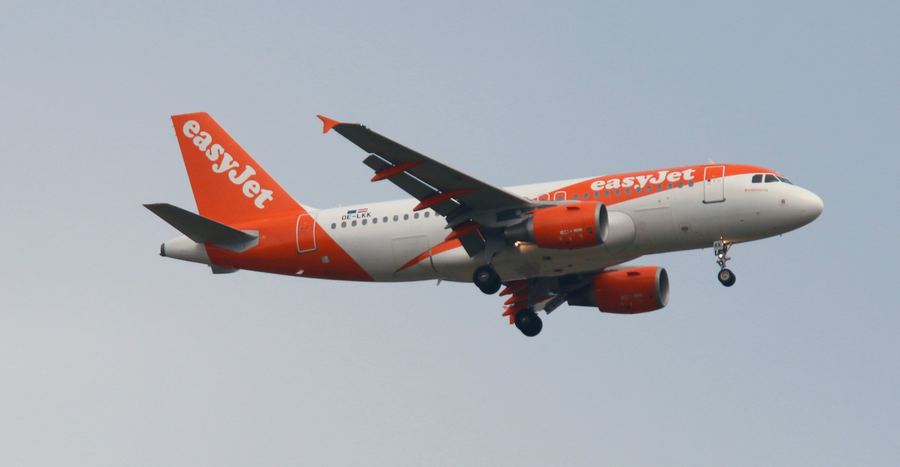
A low-cost carrier is an airline built around minimizing operating costs, trading away amenities that traditional carriers offer in exchange for cheaper base fares, then recouping revenue through add-on fees for things like seat selection or carry-on bags. Common cost-saving practices include flying a single aircraft type to simplify training and maintenance, using secondary airports with lower landing fees, and running rapid aircraft turnarounds to fit more flights into each day. The model traces back to Pacific Southwest Airlines' 1949 California routes, which later inspired Herb Kelleher to found Southwest Airlines in 1971; Europe's low-cost sector took off in the 1990s following airspace deregulation, led by carriers like Ryanair and easyJet. By the late 2010s, low-cost carriers had captured more than half the market in South and Southeast Asia and roughly a third of seats in Europe and North America.
History
The low-cost model traces to Pacific Southwest Airlines, which began no-frills intrastate flights in California in 1949, an approach that directly inspired Herb Kelleher to found Southwest Airlines in 1971 using the same low-fare, high-frequency strategy. Ryanair and easyJet led Europe's low-cost expansion in the 1990s after regional airspace deregulation opened new competitive routes previously reserved for flag carriers. The model spread globally through the 2000s and 2010s, with low-cost carriers capturing growing market share across Asia, North America, and Latin America by stripping down included services and monetizing add-ons instead.
Design & Specifications
Low-cost carrier fleets are typically standardized around a single aircraft type, most commonly a member of the Boeing 737 or Airbus A320 family, which simplifies pilot training, maintenance, and spare parts logistics compared to operating a mixed fleet. Cabin configurations favor higher-density, single-class seating with less legroom than a comparable full-service airline, maximizing the number of paying seats on each flight. Low-cost carriers frequently operate from secondary or regional airports rather than major hubs, since landing fees and gate costs are typically lower, even if it means a longer ground journey for some passengers. Rapid aircraft turnaround times between flights, sometimes under 30 minutes, let low-cost carriers fly more cycles per aircraft per day than competitors, squeezing more revenue out of each airframe.
Operations
Low-cost carrier operations are built around maximizing aircraft utilization, scheduling as many flight cycles per day per aircraft as possible by minimizing the time an aircraft spends on the ground between flights. Standardized ground procedures, using the same boarding process, cabin cleaning routine, and turnaround checklist at every airport, help crews complete this quick turnaround consistently regardless of location. Point-to-point route networks, rather than hub-and-spoke connections, are typical of the low-cost model, since they avoid the operational complexity and potential for cascading delays that connecting itineraries can create. Direct online booking and check-in systems, bypassing traditional travel agents and reducing distribution costs, have also become a defining operational feature of how low-cost carriers sell and manage reservations.
See also
References
| Category | Airline Business Models & Carrier Types |
| Type | Budget airline |
| Origin | Pacific Southwest Airlines, 1949 |
| Examples | Southwest, Ryanair, easyJet |
| Model | Low fare + paid add-ons |