
Overview
A supersonic aircraft is an aircraft capable of flying faster than the speed of sound, or Mach 1, with supersonic aircraft development concentrated mainly in the second half of the 20th century for research and military purposes. Only two supersonic aircraft have ever entered civilian passenger service: the Soviet Tupolev Tu-144, first flown in December 1968, and the Anglo-French Concorde, first flown in March 1969, both operated commercially as supersonic airliners before eventually being retired. Fighter jets remain the most common example of supersonic aircraft in active service today, since military requirements for speed have consistently outpaced the commercial case for supersonic passenger travel. The aerodynamics of supersonic flight, known as compressible flow, involves complex shock-wave behavior that doesn't occur at subsonic speeds, requiring fundamentally different design approaches than conventional aircraft.
History
Chuck Yeager achieved the first confirmed supersonic flight in level flight in 1947, piloting the Bell X-1 research aircraft and breaking through Mach 1 for the first time in aviation history. Supersonic fighter jets became standard military equipment through the 1950s and 1960s as jet engine technology matured enough to sustain supersonic speeds reliably. The Soviet Tupolev Tu-144 and Anglo-French Concorde both entered civilian supersonic passenger service in the 1970s, though high operating costs, noise restrictions, and the 2000 Concorde crash ultimately led to both aircraft's retirement by the mid-2000s. Since Concorde's retirement in 2003, no supersonic passenger aircraft has entered commercial service, though several companies have pursued new supersonic airliner concepts in recent years aimed at addressing the noise and efficiency problems that ended the first supersonic passenger era.
Design & Specifications
Supersonic aircraft use thin, swept wings and specially shaped fuselages to manage shockwave formation and drag at speeds above Mach 1.
Operations
Supersonic flight requires careful management of sonic boom effects over populated areas, which is why most supersonic operations occur over water or restricted airspace.
See also
References
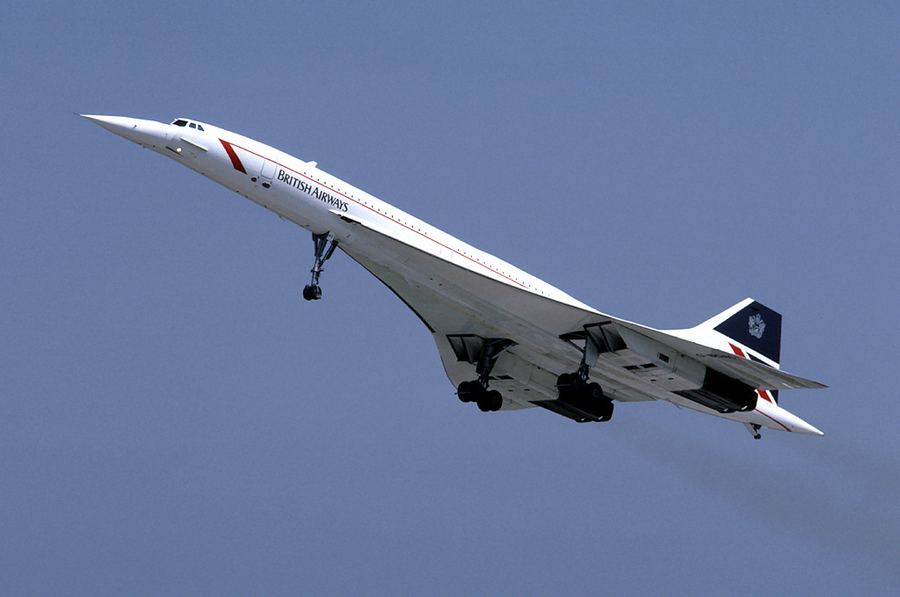
| Category | Aircraft Types & Categories |
| Type | Flight above Mach 1 |
| First Achieved | Chuck Yeager, Bell X-1, 1947 |
| Civil Examples | Concorde, Tupolev Tu-144 |
| Status | No active civil supersonic service |