
Overview
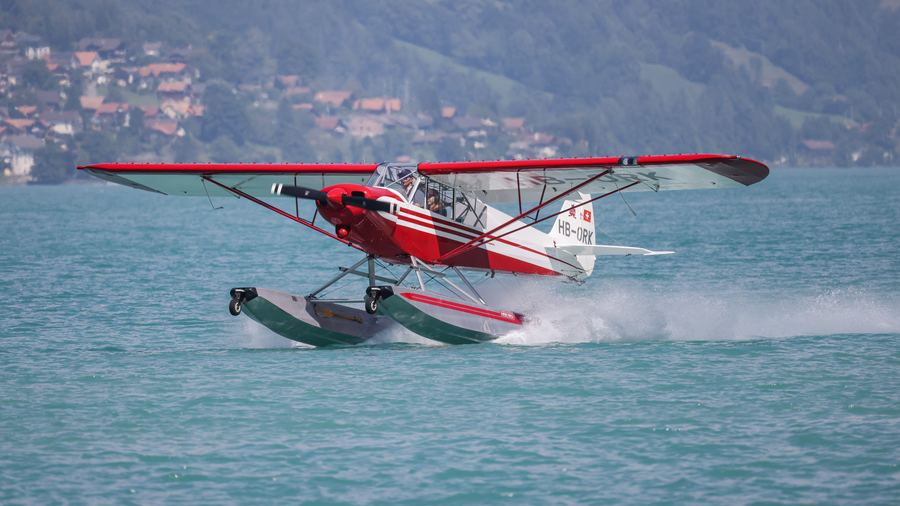
A seaplane is a powered fixed-wing aircraft capable of taking off and landing on water, generally divided into two categories: floatplanes, which use separate pontoon floats, and flying boats, whose fuselage itself forms the hull, typically making them larger and more capable of carrying heavier loads. Seaplanes that can also operate from conventional airfields fall into a further subclass called amphibious aircraft. Seaplane use tapered off significantly after World War II, driven partly by wartime investment in land-based airport infrastructure and partly because conventional landplanes were less constrained by weather and water conditions than seaplanes operating from open water. Seaplanes remain in use today mainly for specialized roles such as remote-area transport, firefighting, and recreational flying, where water access offers a clear operational advantage over fixed runways.
History
Early seaplane development began in the 1900s and 1910s, with several inventors experimenting with float-equipped aircraft capable of operating from water rather than requiring a prepared runway. Seaplanes saw significant military and commercial use through the interwar period and World War II, since water landing sites were often more readily available than paved runways in many parts of the world at the time. Large flying boats, including the famous Pan Am Clipper aircraft of the 1930s, pioneered long-distance international passenger routes before land-based airports had expanded sufficiently to support the same journeys. Seaplane use declined sharply after World War II as wartime airport construction left a much denser global network of paved runways, reducing the practical advantage seaplanes had previously held for reaching remote destinations.
Design & Specifications
Floatplanes mount pontoon floats beneath a standard airframe, while flying boats integrate a boat-like hull directly into the fuselage, both designed to provide buoyancy and stability on water.
Operations
Seaplane pilots must assess water conditions including waves and debris before takeoff and landing, since water surfaces present different hazards than a prepared runway.
See also
References
| Category | Aircraft Types & Categories |
| Type | Water-capable fixed-wing aircraft |
| Subtypes | Floatplane, flying boat, amphibious |
| Peak Era | Interwar period-WWII |
| Status | Niche / remote-area use |