
Overview
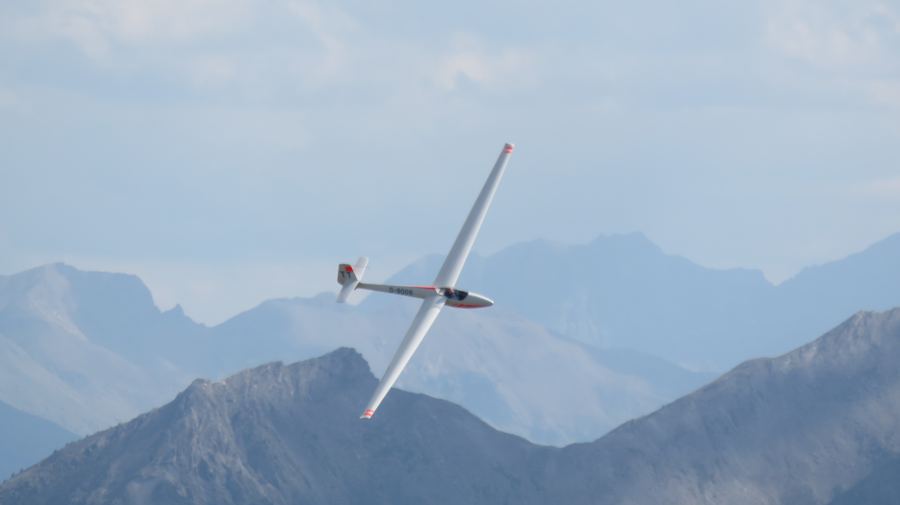
A glider is a fixed-wing aircraft supported in flight by the dynamic reaction of air against its lifting surfaces, with free flight that doesn't depend on an engine. Most gliders carry no engine at all, though motor-gliders include small engines that can extend flight by sustaining altitude when needed, and some are powerful enough to self-launch without a tow. Gliders vary widely in construction, aerodynamic efficiency, and intended purpose, and most exploit meteorological phenomena — such as rising thermal air currents or ridge lift — to maintain or gain altitude during flight. Gliders are used primarily for the air sport of gliding, as well as for related activities such as hang gliding and paragliding, which use lighter, differently structured aircraft built around the same basic unpowered-flight principle.
History
Glider flight predates powered aviation entirely, with pioneers like Otto Lilienthal conducting systematic glider experiments in the 1890s that directly influenced the Wright brothers' own early aircraft designs. Motorless glider flight continued developing as both a scientific pursuit and a sport through the early 20th century, particularly in Germany, where post-World War I restrictions on powered aircraft development pushed significant engineering talent toward glider design instead. Modern high-performance sailplanes, built from fiberglass and carbon composite materials, emerged from the 1950s onward, dramatically improving the lift-to-drag ratios achievable compared to earlier wood-and-fabric designs. Gliding remains an active competitive and recreational sport today, with pilots using specialized instruments to detect and exploit thermal and ridge lift for extended cross-country flights.
Design & Specifications
Modern sailplanes use long, slender wings built from fiberglass or carbon composite for a high lift-to-drag ratio, with a small cockpit and no engine, or a retractable motor on motor-glider variants.
Operations
Gliders are launched by aerotow behind a powered aircraft or by ground winch, then pilots seek out thermals or ridge lift to stay airborne and gain altitude for extended cross-country flights.
See also
References
| Category | Aircraft Types & Categories |
| Type | Unpowered fixed-wing aircraft |
| Pioneer | Otto Lilienthal, 1890s |
| Modern Material | Fiberglass / carbon composite |
| Status | Active sport worldwide |