
Overview
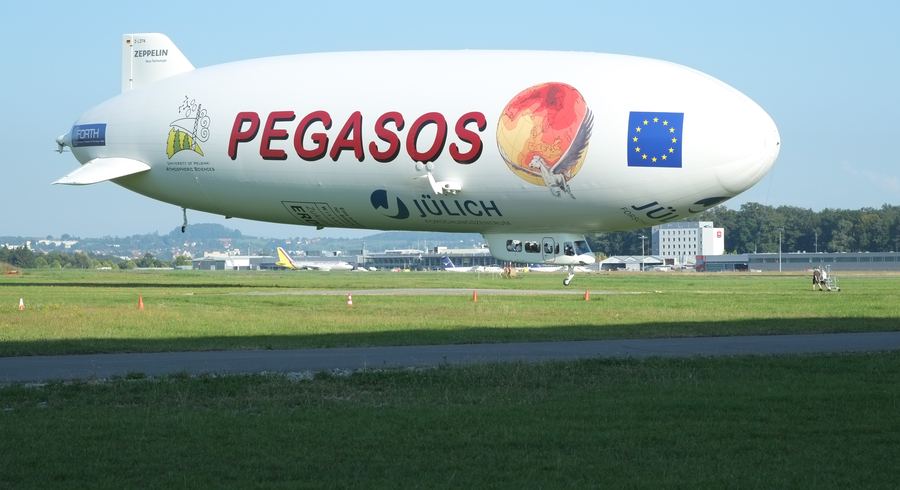
An airship, also called a dirigible balloon or dirigible, is a type of lighter-than-air aerostat aircraft that can navigate through the air under its own power, using buoyancy from a lifting gas less dense than the surrounding air to stay aloft. Early dirigibles used hydrogen for its high lifting capacity and easy availability, but hydrogen's flammability caused several fatal accidents that ultimately made hydrogen airships obsolete. Helium, the main alternative, isn't flammable but is comparatively rare and expensive, and most airships built since the 1960s have used helium, though some smaller modern designs use heated air instead. Airships remain in limited use today, mainly for advertising, aerial observation, and tourism, having been largely displaced from passenger and cargo transport by fixed-wing aircraft.
History
The first practical powered airship flew in France in 1852, though the modern rigid airship design most associated with the term is credited to Germany's Count Ferdinand von Zeppelin, whose first Zeppelin flew in 1900. Hydrogen-filled airships reached their peak in the 1920s and early 1930s, used for long-distance passenger and cargo transport, including transatlantic service, before the 1937 Hindenburg disaster effectively ended the era of hydrogen passenger airships. Helium became the standard lifting gas for most airships built from the mid-20th century onward, valued for its non-flammability despite its higher cost and relative scarcity. Airships have persisted in niche roles since, primarily for advertising, aerial observation, and, more recently, experimental cargo-transport concepts exploring modern lighter-than-air technology.
Design & Specifications
Modern airships use a rigid or semi-rigid internal frame holding gas cells filled with helium, with engines and a gondola mounted beneath the envelope for propulsion and crew.
Operations
Airships are flown at low altitude and speed compared to fixed-wing aircraft, using ballast and engine thrust vectoring to control altitude and are mainly operated today for advertising and sightseeing.
See also
References
| Category | Aircraft Types & Categories |
| Type | Lighter-than-air, powered |
| Pioneer | Count von Zeppelin, 1900 |
| Peak Era | 1920s-early 1930s |
| Modern Lifting Gas | Helium |