
Overview
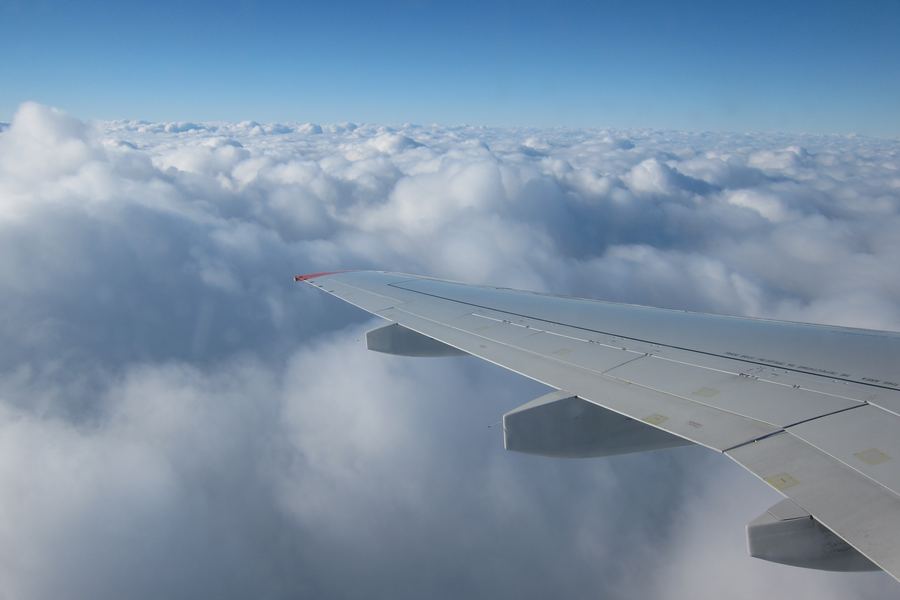
A wing is a structure that produces both lift and drag as it moves through air, defined by two key shape characteristics: its airfoil cross-section and its planform, or overall shape when viewed from above. Wing efficiency is commonly expressed as the lift-to-drag ratio, comparing the aerodynamic benefit a wing provides against the air resistance it creates as it flies. Similar foil structures moving through water appear on hydrofoil vessels and foiling sailboats, which lift partially or entirely out of the water at speed, and on submarines, which use diving planes to control depth while submerged. Wing design involves balancing numerous competing factors — including span, sweep, aspect ratio, and airfoil shape — to optimize an aircraft for its intended speed range, maneuverability, and efficiency requirements.
History
Early aircraft wing design drew heavily on trial-and-error experimentation, with the Wright brothers' own systematic wind tunnel testing in 1901 helping establish more reliable data on airfoil shapes than had previously been available. Wing design evolved rapidly through the early 20th century, from the thin, heavily braced wings of early biplanes to the thicker, cantilevered monoplane wings that became standard by the 1930s as materials and structural engineering improved. Swept-wing designs, developed in the 1940s, allowed aircraft to fly faster by delaying the onset of compressibility effects at high subsonic speeds, becoming a defining feature of jet-age aircraft design. Modern wing design continues to evolve through advances in composite materials and computational optimization, with features like winglets, added widely from the 1980s onward, improving fuel efficiency by reducing wingtip vortex drag.
Design & Specifications
Wings are built around an internal spar and rib structure covered by a load-bearing skin, shaped to a specific airfoil profile optimized for the aircraft's intended speed range.
Operations
Wings generate lift continuously throughout flight, with pilots adjusting flaps and speed to match the wing's performance to each phase of the flight.
References
| Category | Aerodynamics & Aircraft Anatomy |
| Type | Primary lift-generating structure |
| Key Traits | Airfoil shape, planform |
| Efficiency Metric | Lift-to-drag ratio |
| Notable Feature | Winglets (since 1980s) |