
Overview
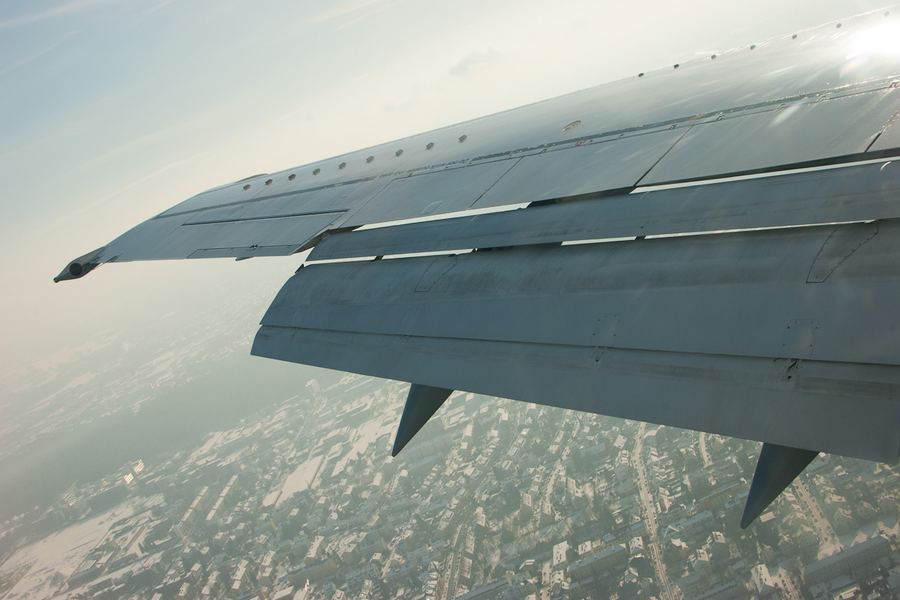
A flap is a high-lift device mounted on the trailing edge of a fixed-wing aircraft's wings, used to reduce the aircraft's stalling speed at a given weight and to shorten both takeoff and landing distances. Extending flaps increases drag as well as lift, which is why pilots retract them once they're no longer needed during climb or cruise. Most aircraft use partial-span flaps, extending from near the wing root to the inboard end of the ailerons, which shifts a greater share of the wing's lift production toward the inboard section when extended. This redistribution of lift, and the accompanying reduction in angle of attack on the outboard wing, helps maintain safer stall characteristics during the low-speed phases of flight when flaps are typically deployed.
History
Early aircraft had no flaps at all, relying solely on wing shape and pilot skill to manage takeoff and landing speeds, which limited how slow an aircraft could safely fly before stalling. Flap designs began appearing in the 1920s and 1930s as aircraft speeds increased and designers needed a way to maintain safe low-speed handling without permanently sacrificing high-speed cruise efficiency. More sophisticated flap designs, including slotted and Fowler flaps that also increase wing area when extended, were developed through the mid-20th century to further reduce stall speeds on increasingly heavy airliners. Modern airliners typically use multi-stage flap systems combining several of these design principles, reflecting decades of incremental refinement since flaps were first introduced.
Design & Specifications
Flaps extend from the wing's trailing edge via mechanical tracks or hinges, controlled by a lever or switch in the cockpit with multiple selectable positions.
Operations
Pilots extend flaps during takeoff and landing to reduce stall speed and control approach angle, retracting them once climbing away or reaching cruise speed.
References
| Category | Aerodynamics & Aircraft Anatomy |
| Type | High-lift wing device |
| Location | Wing trailing edge |
| Purpose | Lower stall speed, shorten runway |
| Status | Standard on most aircraft |