
Overview
Elevators are flight control surfaces, typically located at the rear of an aircraft, that control pitch and therefore the wing's angle of attack and lift. They're usually hinged to the tailplane or horizontal stabilizer, though on some aircraft — particularly early designs and canard configurations — they're mounted at the front instead, and some modern aircraft integrate the entire horizontal tailplane into a moving surface called a stabilator. The horizontal stabilizer typically generates a downward force that balances the nose-down moment created by the wing's lift acting behind the aircraft's center of gravity, and the elevator adjusts that balance to raise or lower the nose as needed. Along with ailerons and the rudder, elevators form one of the three primary flight control surfaces used to maneuver a fixed-wing aircraft.
History
Early aircraft designs experimented with elevator placement extensively, with some pioneers, including the Wright brothers, placing the elevator at the front of the aircraft in a canard configuration rather than the rear. Most aircraft manufacturers settled on rear-mounted elevators, hinged to a horizontal stabilizer, as the standard configuration by the 1910s and 1920s, since it offered more predictable handling characteristics across a wider range of flight conditions. The all-moving tailplane, or stabilator, was developed later in the 20th century, particularly for high-speed military aircraft, to provide more effective pitch control at speeds where a conventional hinged elevator alone became less effective. Modern airliners typically retain the conventional hinged elevator and horizontal stabilizer configuration established nearly a century ago, reflecting how well the basic design continues to meet the needs of subsonic passenger aircraft.
Design & Specifications
Elevators are hinged panels on the horizontal stabilizer's trailing edge, moved by cables, rods, or electronic actuators connected to the cockpit controls.
Operations
Pilots move elevators via forward and backward control column movement, adjusting pitch to climb, descend, or maintain level flight.
References
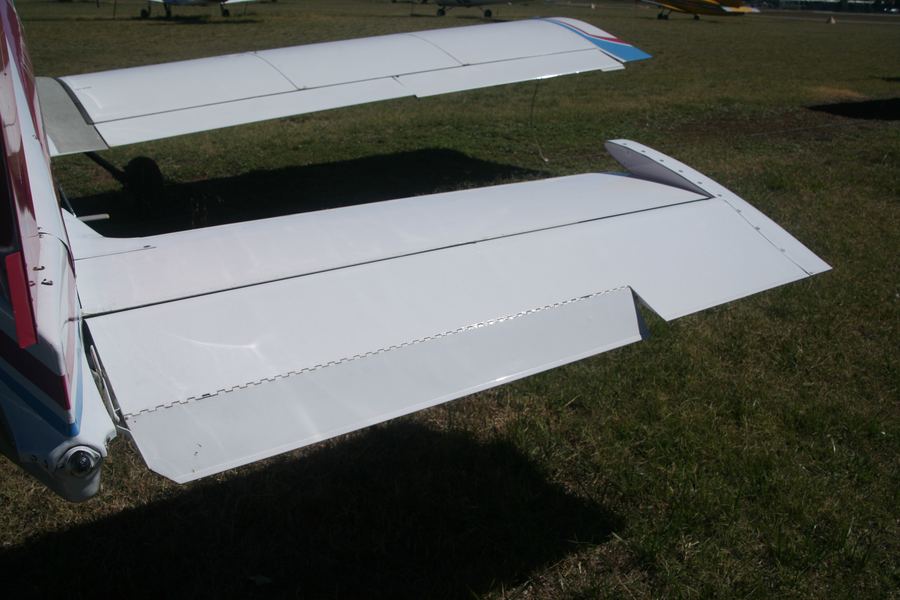
| Category | Aerodynamics & Aircraft Anatomy |
| Type | Pitch control surface |
| Location | Horizontal stabilizer / tailplane |
| Alternative Design | Stabilator (all-moving tail) |
| Status | Standard on fixed-wing aircraft |