
Overview
In fluid dynamics, drag — sometimes called fluid resistance — is a force acting opposite to the direction of an object's motion relative to the fluid surrounding it, whether that fluid is air, water, or something else. Drag forces tend to slow an object's velocity relative to the fluid it's moving through, and unlike some other resistive forces, drag depends heavily on velocity: it scales roughly proportional to speed at low velocities and to the square of speed at higher velocities. In aviation, minimizing drag while maximizing lift is one of the central goals of aerodynamic design, since excess drag directly increases the fuel needed to maintain a given speed. Engineers categorize aircraft drag into several types, including parasitic drag from the aircraft's shape and surface friction, and induced drag that arises as a direct consequence of generating lift.
History
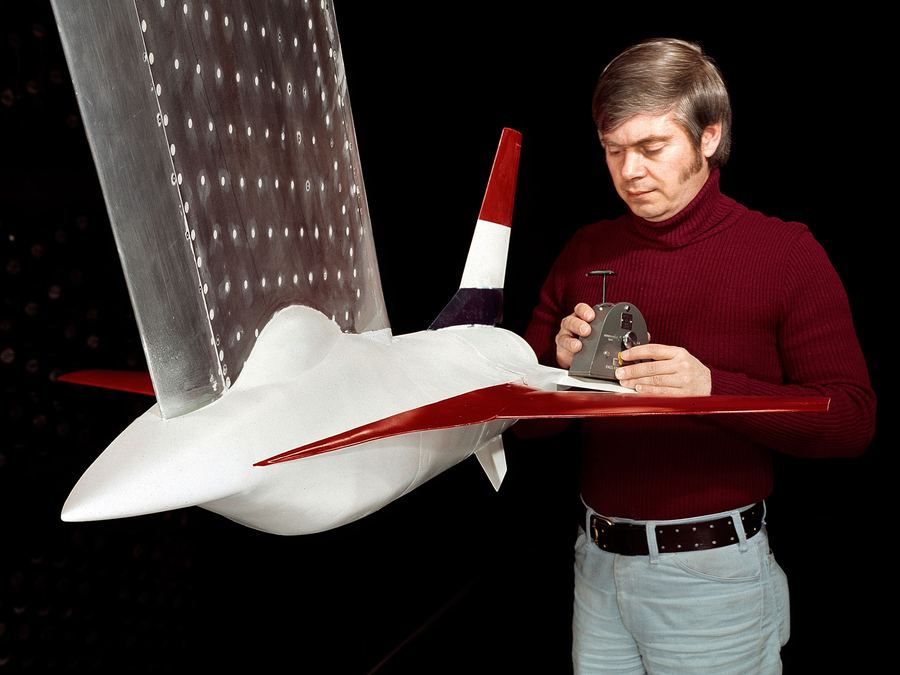
Early aerodynamic drag research in the 18th and 19th centuries relied on simple experiments dropping or towing objects through air or water to observe resistance, long before modern wind tunnels existed. The relationship between drag and velocity was formalized mathematically through the 19th and early 20th centuries, distinguishing low-speed drag, proportional to velocity, from high-speed drag, proportional to velocity squared. Wind tunnel testing, which became widely available in the early 20th century, allowed engineers to measure and refine an aircraft's drag characteristics directly rather than relying solely on theoretical calculation. Computational fluid dynamics, developed from the mid-20th century onward and vastly expanded with modern computing power, has since supplemented physical wind tunnel testing as a primary tool for predicting and minimizing aircraft drag during design.
Design & Specifications
Drag is calculated from an object's shape, surface area, and speed, with engineers categorizing it into parasitic and induced components for design purposes.
Operations
Designers minimize drag through smooth surface finishes, streamlined shapes, and devices like winglets, directly improving fuel efficiency in operation.
See also
References
| Category | Aerodynamics & Aircraft Anatomy |
| Type | Resistive aerodynamic force |
| Acts | Opposite direction of motion |
| Categories | Parasitic, induced |
| Goal in Design | Minimize while maximizing lift |